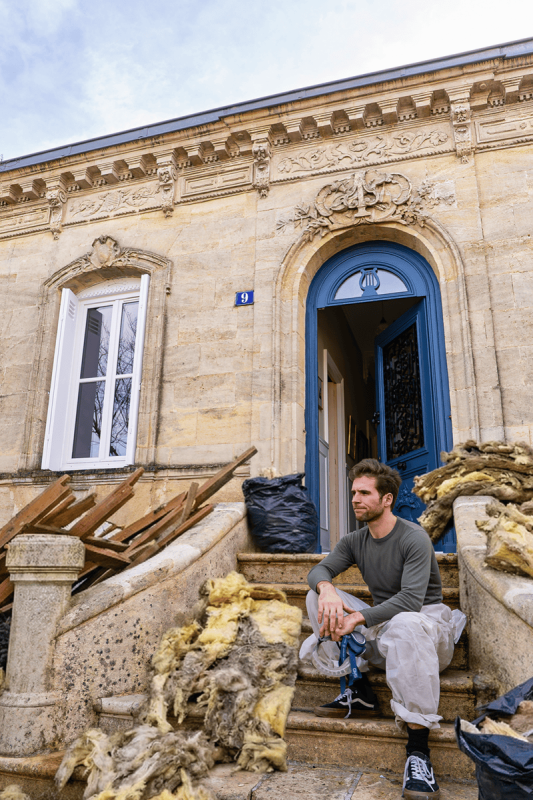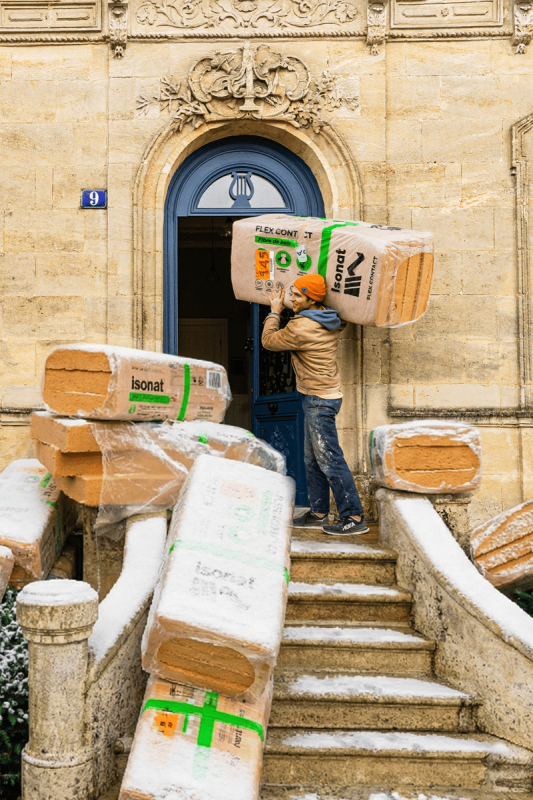
There is something deeply satisfying about a renovation project that has been dragging on for weeks — maybe months — finally rounding the corner toward completion. That feeling of seeing a room transform from a perpetual building site into something that actually resembles a finished, liveable space is what keeps us going through the dusty, exhausting, and occasionally maddening process of restoring a 200-year-old house in southwest France.
In our latest chapter, we are tackling three very different but equally rewarding parts of life at La Chartreuse: wrapping up the bedroom makeover that has tested our patience and our woodworking skills, spending a glorious day hunting for antiques at one of Bordeaux’s best markets, and getting our old stone house ready for the festive season. Each one of these deserves a proper telling, so settle in.
The Bedroom Makeover: Finishing the Drawer Fronts
If you have been following our renovation journey for a while, you will know that the big bedroom has been a labour of love. This room sits at the heart of the house — generous proportions, tall windows that let in that beautiful Bordelais light, original ceiling mouldings that we painstakingly restored — and it has been our most ambitious interior project to date. The walls are done, the floor is down, and we have been chipping away at the built-in storage and cabinetry that will give this room both its function and its character.
The final piece of the puzzle — or at least the final piece of this particular phase — has been the drawer fronts. Now, drawer fronts might sound like the most mundane detail imaginable. They are just flat panels on the front of drawers, right? In reality, getting them right in a period property is a deceptively complex job that can make or break the entire look of a room.
Why Drawer Fronts Matter More Than You Think
In a modern flat-pack kitchen or bedroom set, drawer fronts are standardised, machine-cut, and perfectly uniform. You order them, they arrive, you clip them on. Done. But when you are building bespoke cabinetry for a 19th-century house — where no wall is perfectly plumb, no corner is a true right angle, and the character of the room demands something that feels handcrafted rather than factory-produced — the process is entirely different.
Each drawer front needs to be individually measured, cut, and fitted. You are working with real timber, which means accounting for the natural movement of the wood, the grain direction, and how each piece will sit alongside its neighbours. The gap between each front needs to be consistent — not so tight that the drawers bind when humidity changes with the seasons, and not so loose that it looks sloppy. In an old French house where the air can shift from bone-dry in summer to damp in winter, this is more than an aesthetic concern. It is a practical one.
We spent considerable time selecting the right wood for these fronts. The goal was to complement the existing elements in the room — the warm tones of the restored floorboards, the soft grey of the walls, the aged patina of the original hardware we salvaged from other parts of the house. We wanted something that looked like it had always been there, as though it were part of the house’s original story rather than a modern addition.
The Process: Patience Over Speed
Fitting the drawer fronts was a methodical process. Each panel was rough-cut slightly oversized, then planed and sanded to its final dimensions on site. We test-fitted each one multiple times, shaving off fractions of a millimetre here and there until the fit was just right. It is the kind of work where you cannot rush. One careless pass with the plane and you have taken off too much — and unlike digital work, there is no undo button with woodworking.
The satisfaction of clicking that final drawer shut and seeing a perfectly flush front — level with its neighbours, even gaps all round, smooth to the touch — is hard to overstate. It is one of those small victories that make the hundreds of hours of renovation work feel worthwhile. The bedroom is now genuinely starting to feel like a finished room rather than a work in progress, and that shift in atmosphere is palpable every time we walk in.
We still have finishing touches to add — hardware, final coat of finish, some styling — but the structural and carpentry work is essentially complete. For a room that has been in various states of upheaval for what feels like an age, this is a milestone worth celebrating.
Antique Hunting at the Quinconces Market in Bordeaux
If there is one event in the Bordeaux calendar that gets our hearts racing, it is the Quinconces antique market. Held twice a year on the vast Place des Quinconces — one of the largest public squares in Europe, right in the centre of Bordeaux — this market draws hundreds of dealers from across France, selling everything from fine 18th-century furniture to quirky vintage curiosities, old oil paintings, antique textiles, estate jewellery, and architectural salvage.
For anyone restoring an old French house, a market like Quinconces is not just a pleasant day out. It is a vital sourcing opportunity. The things you find here — the fabrics, the paintings, the lighting, the hardware — are the details that give a period home its soul. You simply cannot replicate the effect of a genuine 19th-century portrait or a length of antique chinoiserie fabric with modern reproductions, no matter how good they are. There is a depth and a warmth to old objects that new things just do not have.
What We Found: Three Treasures
We went in with a loose list of things we were looking for and, as always, came away with a mix of planned purchases and happy accidents. Here are the three standout finds from this visit:
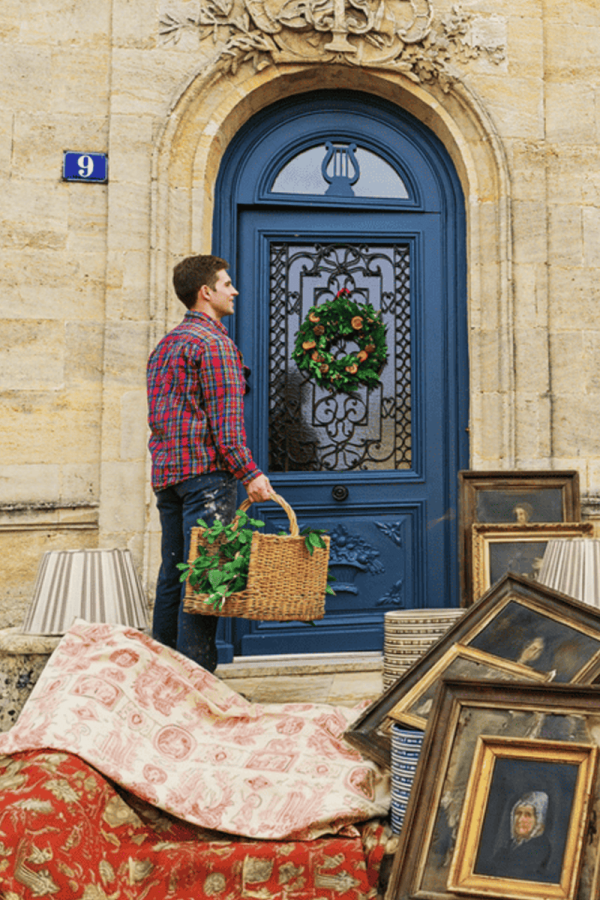
Chinoiserie Vintage Fabric. We have been searching for the right fabric for a particular project in the house — something with history, with texture, with that slightly faded grandeur that suits an old Chartreuse. When we spotted this beautiful chinoiserie piece, we knew immediately it was the one. Chinoiserie — the European artistic style that imitates Chinese art and design — was hugely popular in French interiors from the 17th century onwards, and a well-chosen chinoiserie textile can add an incredible layer of richness and storytelling to a room. This particular piece has a wonderful colour palette that works beautifully with the sage greens and warm neutrals we have been using throughout the house. The slightly worn quality of the fabric only adds to its charm — it feels like something that could have lived in this house for generations.
A 19th-Century Portrait. There is a long tradition in French country houses of hanging portraits — not necessarily of ancestors, but of anonymous subjects whose painted faces become part of the house’s identity over time. We found a charming portrait from the 1800s that has exactly the right scale, colouring, and mood for one of our rooms. The frame is original, with beautiful carved detailing that has aged to a soft gold. These portraits are becoming increasingly sought after, and finding one at the right price, in good condition, with the right feeling for your space is always a small triumph. We are still deciding on its final placement, but it has already been propped up in several rooms while we figure out where it looks best — a delightful problem to have.
The Perfect Lampshade. This might sound like a minor find, but anyone who has spent time searching for the right lampshade knows it can be an absurdly difficult quest. The lampshade for our living room needed to be a specific size, a specific shape, and ideally something with character — not a brand-new, off-the-shelf shade, but something that felt considered and intentional. We found exactly what we were looking for at one of the stalls, and it has transformed the lamp it sits on. Sometimes it is the smallest changes that make the biggest difference in a room.
The Best Quincaillerie in Bordeaux
While we were in the city, we also paid a visit to what we consider the best quincaillerie in Bordeaux. For those unfamiliar with the term — and we would not blame you, as it is one of those French words that looks impossible to pronounce until you have heard it a few times (it is roughly “kan-kai-ree”) — a quincaillerie is a hardware store. But not just any hardware store. This particular shop specialises in antique and period-style fittings: door handles, drawer pulls, escutcheons, hinges, window fittings, curtain hardware, and all the small metal details that make such a significant difference in an old house.
Walking into a well-stocked quincaillerie is an experience in itself. The walls are lined floor to ceiling with brass, iron, and bronze fittings in every conceivable style and period. There are delicate rococo handles next to robust farmhouse latches, ornate key plates next to simple Shaker-style pulls. For renovation obsessives like us, it is essentially a sweet shop. We could — and do — spend hours in there, carefully comparing finishes, weighing the feel of different handles in our hands, and imagining how each piece would look against the doors and drawers of our house.
The staff in these specialist shops are usually incredibly knowledgeable, and this one is no exception. They can tell you the period and provenance of a particular style of fitting, advise on what would be historically appropriate for your property, and often have contacts for hard-to-find pieces. It is the kind of expertise that simply does not exist in a big-box DIY store, and it is one of the things we love most about the French approach to renovation and restoration — there is a deep respect for craft, for history, and for getting the details right.
Christmas at the Chartreuse: Decorating a 200-Year-Old Home for the Holidays
With December rolling in and the days growing short, it was time to bring a little festive warmth to La Chartreuse. Decorating an old French house for Christmas is one of our favourite things to do, and we approach it quite differently from how we might dress a modern home. The key is to work with the house rather than against it — to enhance the character that is already there rather than covering it up with tinsel and plastic baubles.
The Archway Garland and Wreath
The first thing to go up was the garland over the main archway. This is one of those architectural features that makes an old house so rewarding to decorate — the stone archway provides a natural frame, and a generous garland of greenery draped across it creates an instant sense of occasion. We used a mix of fresh and dried foliage: eucalyptus for its beautiful silvery colour and its scent, dried hydrangeas from the garden, and some trailing ivy that grows abundantly around the property.
The wreath went on the front door, made with similar materials and some added berries for a pop of colour. There is a lovely French tradition of using natural, locally gathered materials for Christmas decoration — branches of pine and fir from the garden or nearby woodland, dried flowers saved from the summer, seed heads, and berries. It creates a look that is elegant, understated, and perfectly in keeping with the rustic character of a country Chartreuse.
A French Alternative to the Traditional Christmas Tree
Here is where we did something a little unconventional. Instead of a traditional Christmas tree — which, in a house with very high ceilings, would need to be either absurdly large or comically undersized — we came up with an alternative that suits the space far better. Without giving away all the details, let us just say it involves working with what the property and the surrounding landscape naturally provide, it costs absolutely nothing, and it has a charm that a shop-bought tree simply cannot match.
There is something quite liberating about stepping away from the conventional approach to Christmas decorating. When you are not constrained by the idea that you must have a six-foot Nordmann fir in the corner, you start to see all sorts of creative possibilities. Old houses, with their thick walls, deep window sills, stone fireplaces, and generous proportions, offer so many beautiful surfaces and spaces to work with. A carefully placed cluster of candles on a mantelpiece, a few branches of holly in an old stone pitcher, a garland winding up a staircase banister — these simple touches can create more atmosphere than a house full of mass-produced decorations.
The Magic of an Old House at Christmas
There is something uniquely magical about Christmas in a very old house. The thick stone walls that keep the place cool in summer hold the warmth of the fire in winter. The candlelight flickers against surfaces that have been worn smooth by two centuries of hands. The creak of old floorboards, the smell of wood smoke, the way the low winter light comes through the tall windows — it all combines to create an atmosphere that is impossible to manufacture.
We have spent so many months — years, really — working on this house, repairing and restoring and renovating, that moments like these are deeply meaningful. To sit in a room that we have brought back from ruin, in front of a fire we laid in a hearth we restored, surrounded by decorations made from greenery we gathered from our own garden — it is a reminder of why we embarked on this slightly mad project in the first place. Not for a perfect, magazine-ready interior, but for a home that feels alive with history and warmth and character.
The Bigger Picture: Why These Details Matter
It might seem like an odd combination — drawer fronts, antique shopping, and Christmas decorating — but these three activities actually represent the core pillars of what restoration life is really like. It is not all dramatic before-and-after reveals and sledgehammer demolition. The vast majority of the work happens in the quiet, detailed, painstaking moments: measuring a drawer front for the fifteenth time, turning over an old portrait to check for woodworm, deciding exactly where to hang a wreath.
These are the moments that do not always make for dramatic content, but they are the moments that actually create a home. A house is not made by its walls and roof — those are just the bones. A home is made by the thousands of small decisions about what to put in it, how to arrange it, what to keep and what to let go. Every object in La Chartreuse has been chosen with care, and together they tell a story about who we are, what we value, and what we believe a home should feel like.
The antiques we find at markets like Quinconces are not just decorative objects. They are connections to the past — fragments of other people’s lives and other people’s homes that we are weaving into the ongoing story of this house. The drawer fronts we spent weeks perfecting are not just functional components. They are a testament to the idea that things worth having are worth doing properly. And the Christmas decorations — simple, natural, gathered from the land around us — are a celebration of the place we have chosen to call home.
Looking Ahead
As we close out another year of renovation, we are feeling grateful — for the progress we have made, for the community of people who follow along and cheer us on, and for this extraordinary old house that continues to surprise and challenge and inspire us in equal measure. Every view, every comment, every kind message from people who are following our journey means the world to us. Restoring La Chartreuse is a monumental undertaking, and knowing that others are invested in seeing it come back to life gives us energy on the days when the work feels endless.
There is still so much to do — rooms to restore, gardens to tame, stories to tell — but that is part of the joy. A house like this is never truly finished. It is a living, evolving thing, and we are just the latest in a long line of people who have cared for it. We hope you will continue to follow along as we write the next chapter.