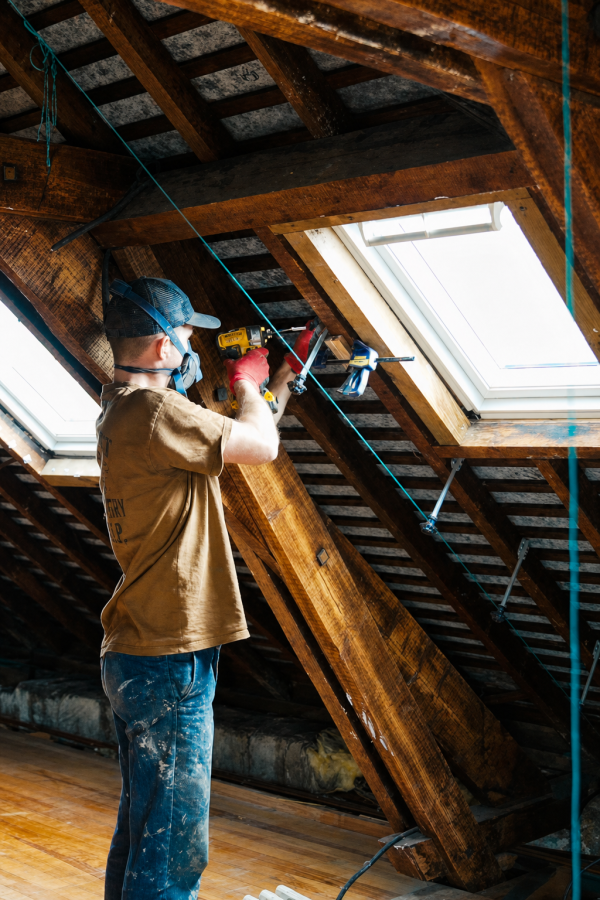
Some renovation jobs are over in a weekend. Others move in, take up residence and quietly eat months of your life. The attic insulation has been the second kind. It has run through episode after episode, filled my hair with wood fibre and made a respirator part of my daily outfit. This week, at long last, it ended.
And because spring waits for no renovation, the garden got its share of attention too. While I was up in the roof, Romy was planting dahlias and weaving willow. Dust upstairs, flowers downstairs, and one very satisfying finish line in between.
Clearing The Decks
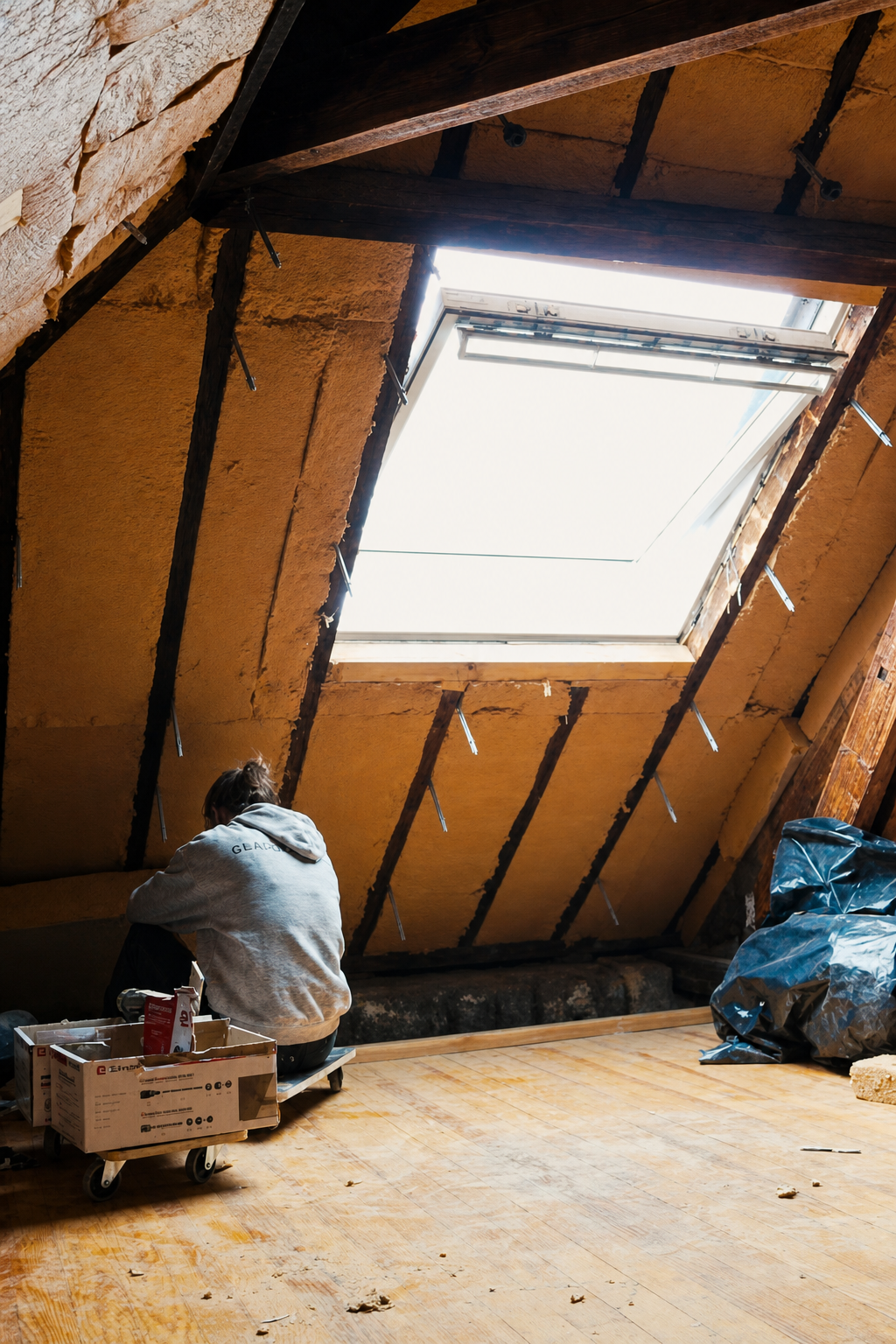
The first half of the attic was already done, membrane, rails and all. That meant it was time to start the untouched side, and starting it meant a morning of pure logistics. Every pack of insulation stored over there had to be carried across to the finished half before any real work could happen. Not the glamorous part of renovation, but you can’t insulate a wall you can’t reach.
The shuffling did come with one properly good moment. The last of the supports came out, and it got a louder celebration on camera than a piece of wood probably deserved. No more supports. Thank goodness for that.
The Messy Layer
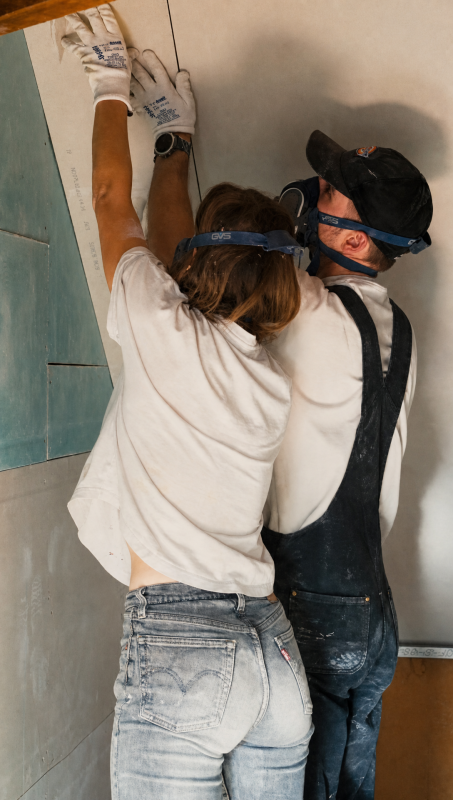
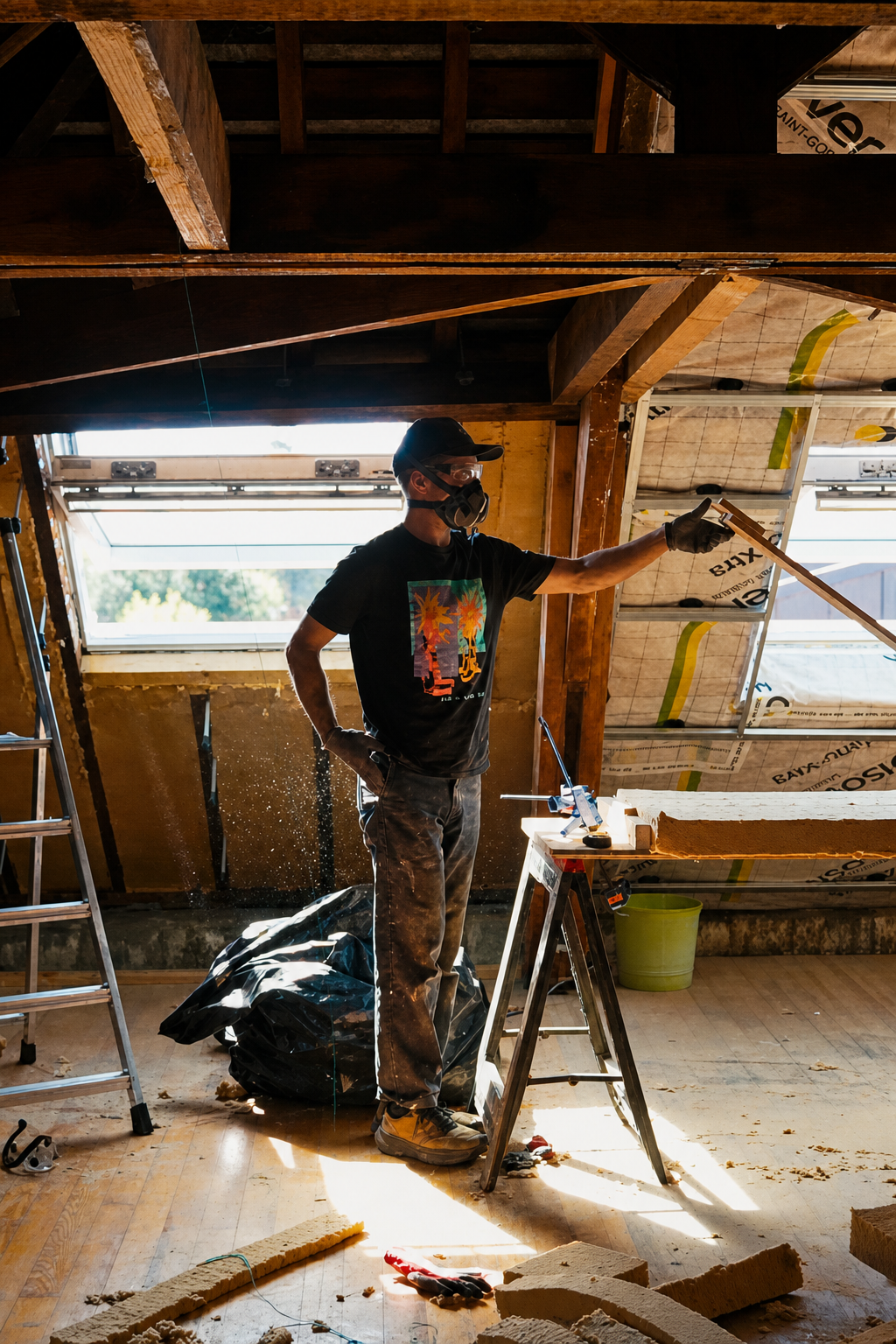
With the space cleared, the first layer of insulation went in fairly quickly. Those are the batts that sit between the chevrons, the wooden beams that carry the roof. That left the layer I had been dreading, the thickest one, which goes over the beams rather than between them. It is the messiest job in the whole attic, which is why I spend most of this episode looking absolutely horrible.
One thought kept us going. Once this layer was in, there would be no more insulation to fit anywhere in the house. My guess on camera was that it would take a few days to finish, and I asked you to wish us luck. We needed both.
The Last Triangle
And then it happened. Every piece of wood fibre in this attic, and in this entire house, is in place. The membrane still needs to go over this side, but the insulation itself is done. True to form, the very last piece, a small triangle tucked into a corner, took longer than sections ten times its size. The last bit always does.
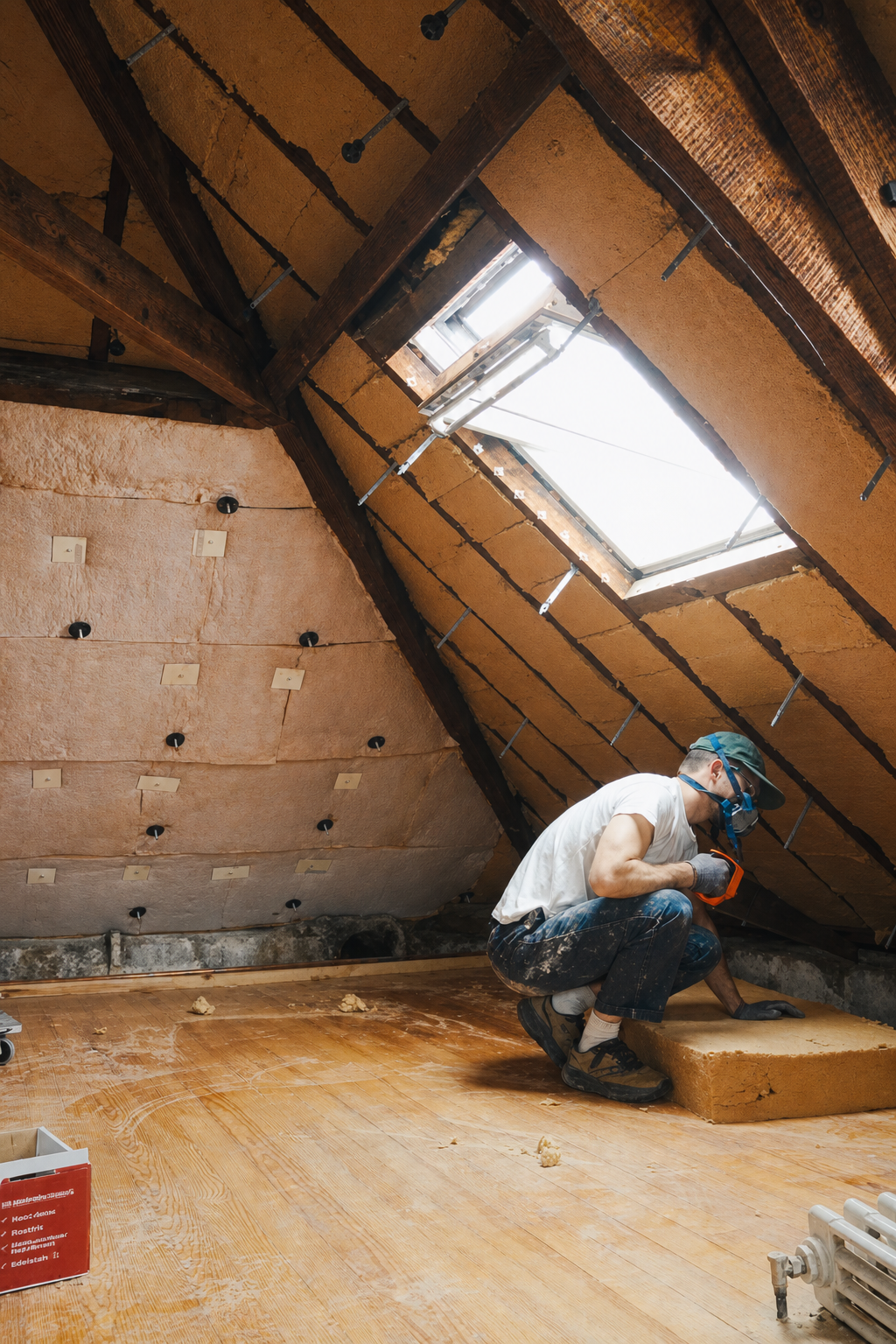
So, would I recommend fitting wood fibre insulation yourself? I’m honestly not sure. We got quicker at it by the end, but it is a dirty, awkward job, and I think professionals are better at it than we ever became. They would charge a lot for the work, and having put in the hours myself, I now understand exactly why. If you’re weighing it up for your own place, get some quotes before you commit your evenings to it. I don’t know if the money we saved was worth the pain and effort.
Over To The Dahlias
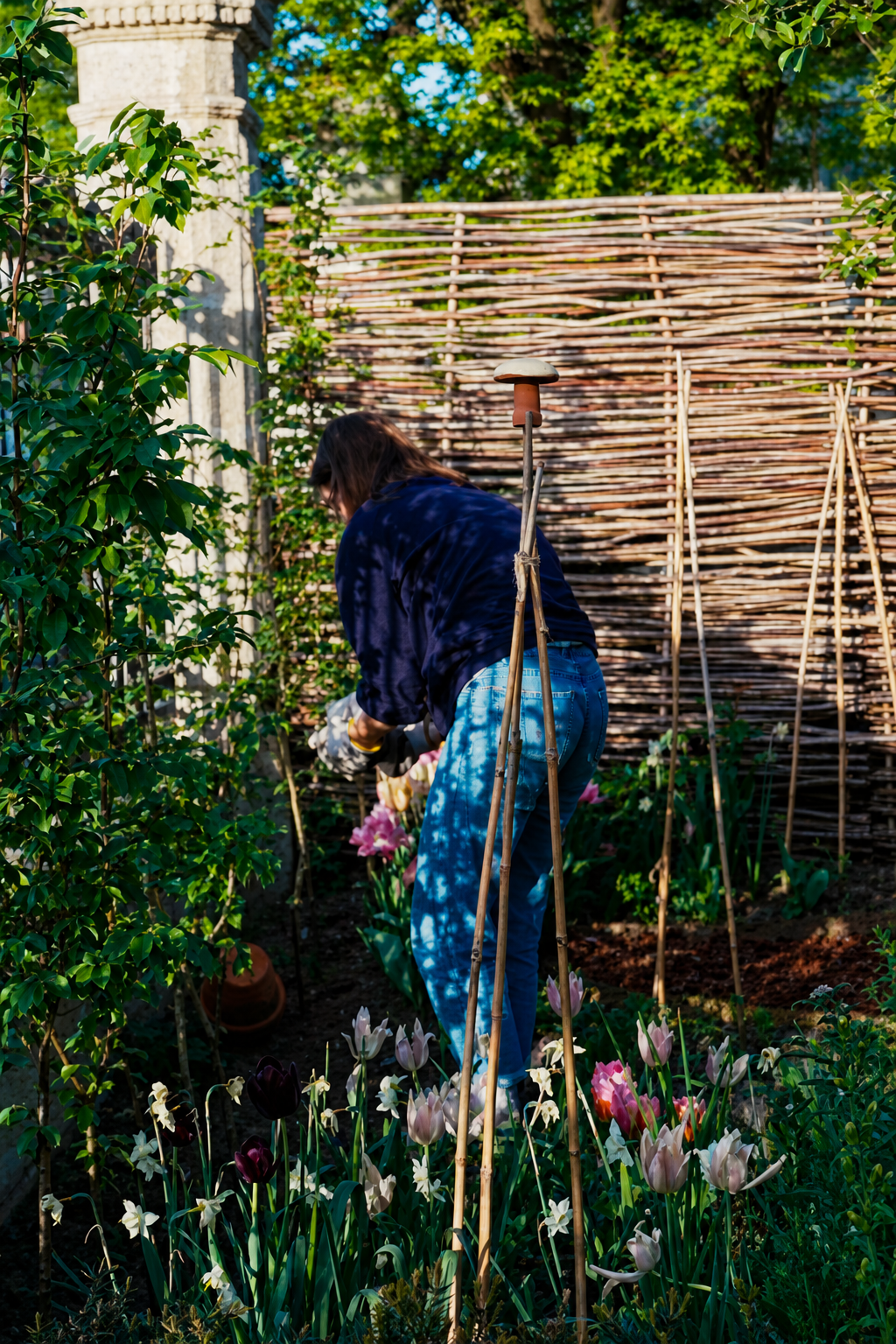
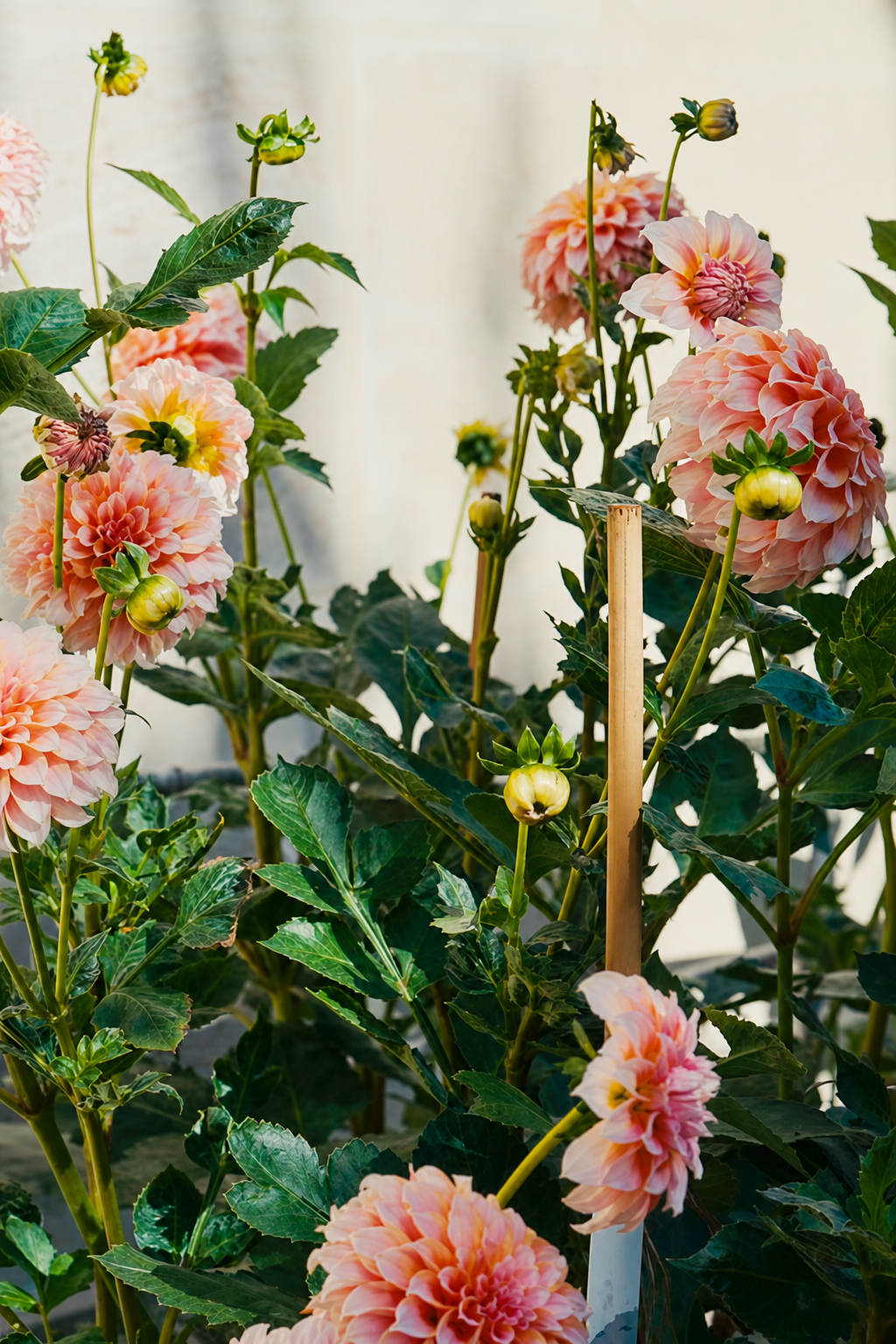
While I was sweating in the roof, Romy was starting one of her favourite jobs of the year, planting the dahlias. She calls them her gateway drug into gardening, and around here they earn their keep. In Bordeaux they flower from July right up to the first frost, which some years holds off until December. They give and give.
You can leave dahlia tubers in the ground over a mild winter and they’ll come back, but Romy doesn’t. She needs those beds for tulips, and our cellar is too humid for storing lifted tubers, a lesson learned the hard way. So the old plants go to the compost at the end of each season, and every spring she picks new varieties to try. With the number of dahlias out there, growing the same one twice would feel like a wasted year.
Planting Day
Most of this year’s dahlias are going in along the house. They grow tall, they look wonderful against the old stone, and they cope well with heat, which matters a great deal in this garden. A few more are headed for the front.
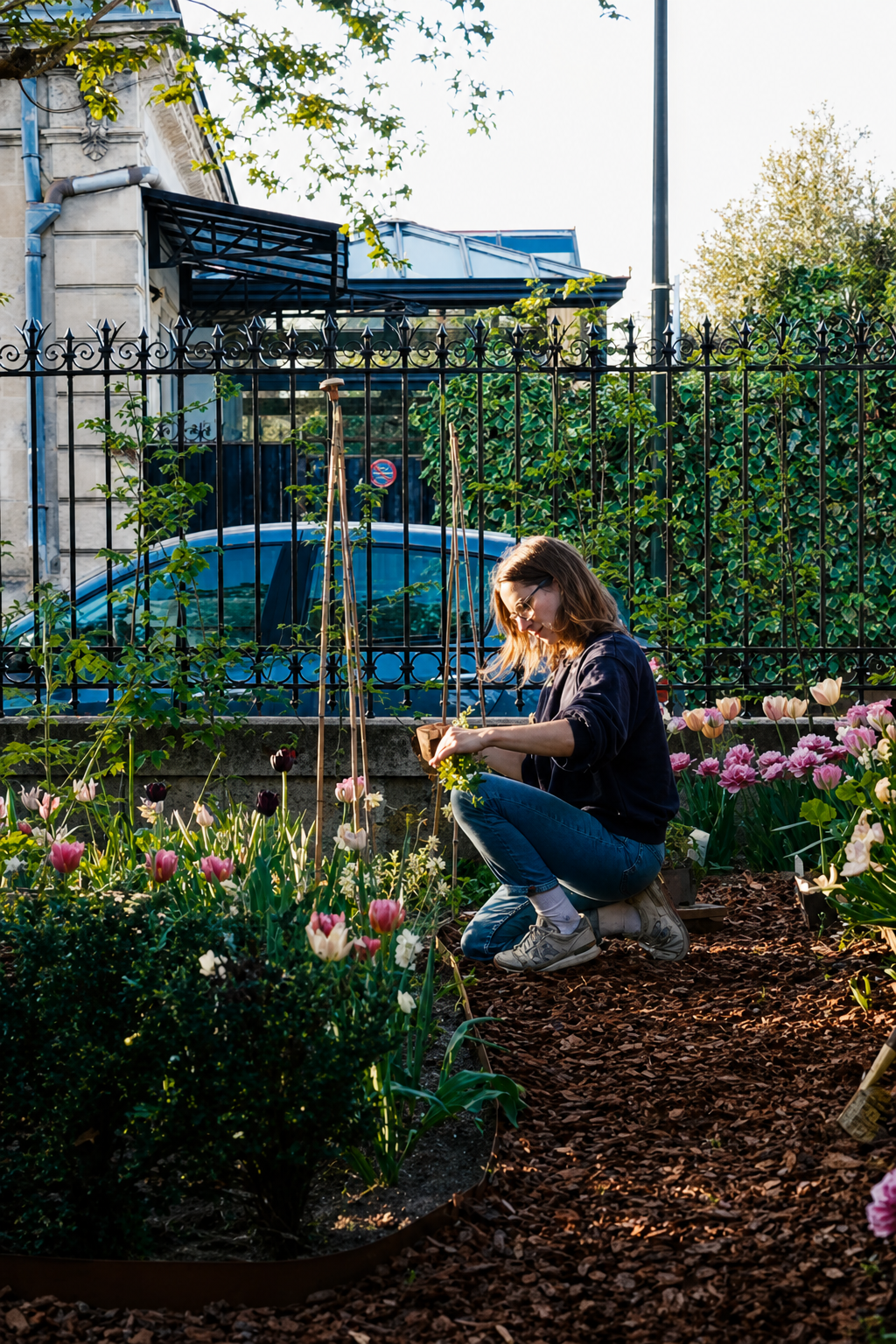
The last of them are starting life in pots, a first for Romy, because the tulips are still flowering in the bed where those dahlias will eventually live. We’ll find out together whether the head start pays off.
Willow Supports
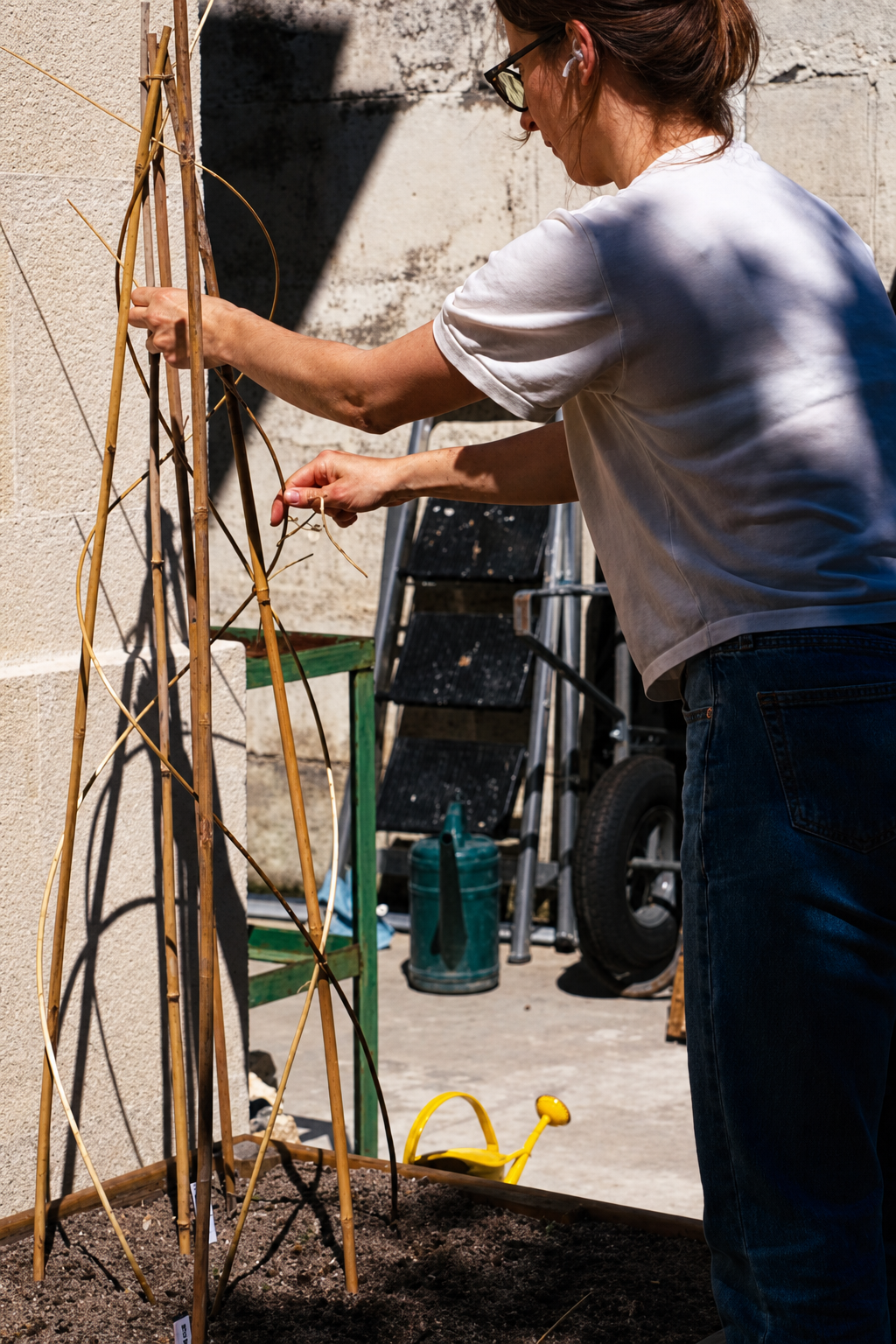
Dahlia flowers are heavy for their stems. Without support the stems snap, or the plant grows into a strange shape, and by her own admission Romy has always been bad at planning for this. Past years were improvised as things started to flop, and the results were ugly.
This year the supports go in from the start, and they need to look like they belong. Her answer is dried willow branches, woven into structures around the planting spots. The first one was built off camera as a test run, four more were on the list for the day, and the rest will wait until you’ve had the chance to weigh in.
The whole finish line, and every stage of the dahlia planting, is in the video at the top of this post. If you’ve fitted wood fibre insulation yourself, tell us in the comments whether you’d do it again, and let Romy know what you make of the willow structures before she starts on the next batch. The attic membrane is up next.