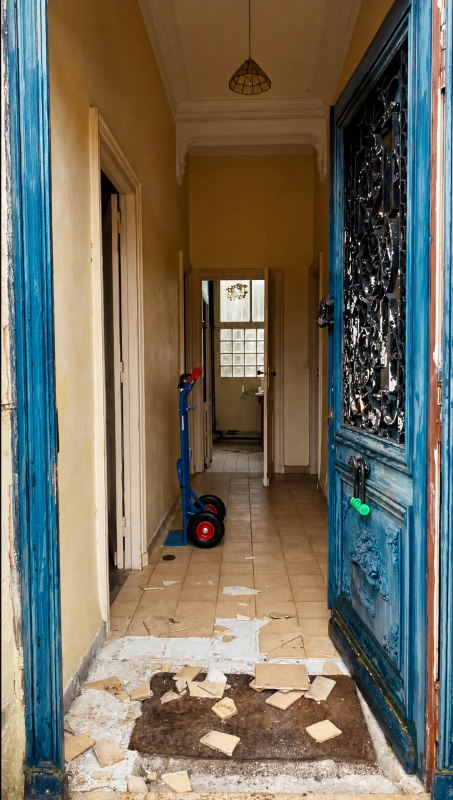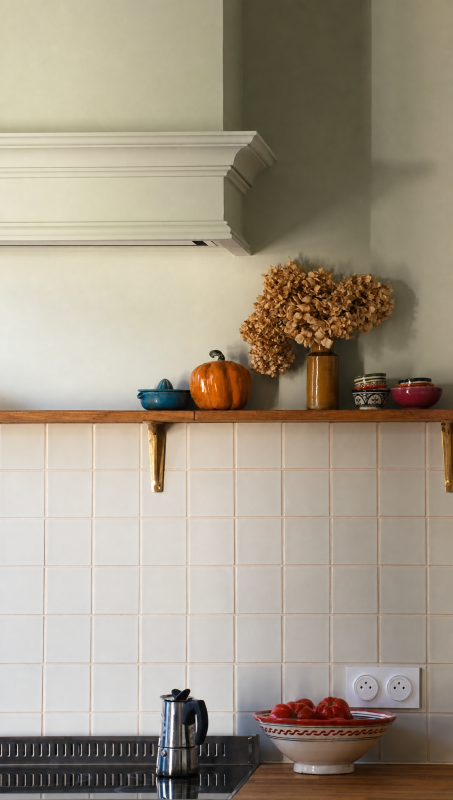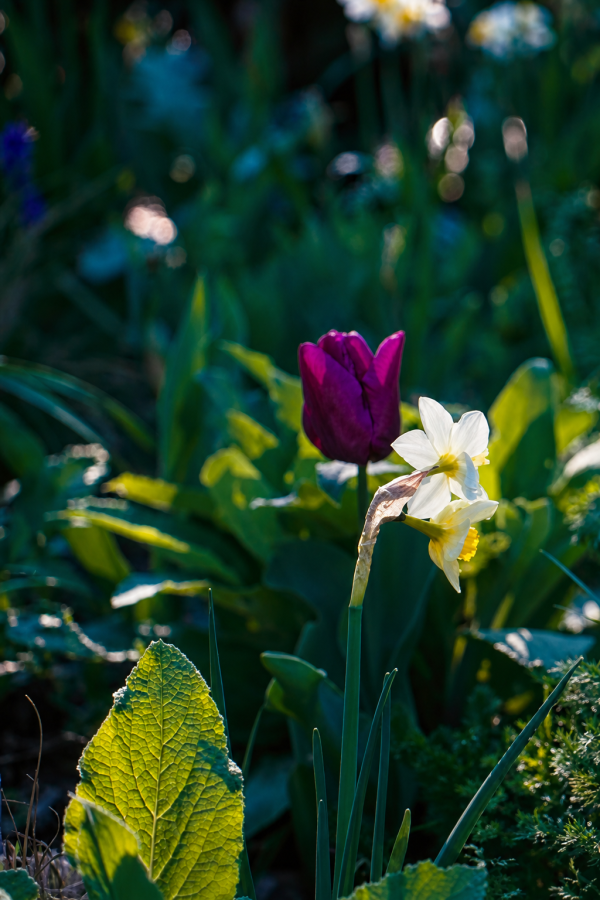
The garden has made up its mind that winter is over. The tulips and narcissi we planted in autumn are up and flowering, the greenhouse is holding its first trays of seedlings, and it’s been 20 degrees in March, which is pretty crazy. After months of dust and insulation, this episode finally has some colour in it.
Back Up In The Dusty Attic
Before any of the fun garden stuff, it’s back up the ladder. Since the last video we’ve kept chipping away at the attic after work and on weekends, helped along by our neighbour and friend Fred, who regulars will recognise by now.
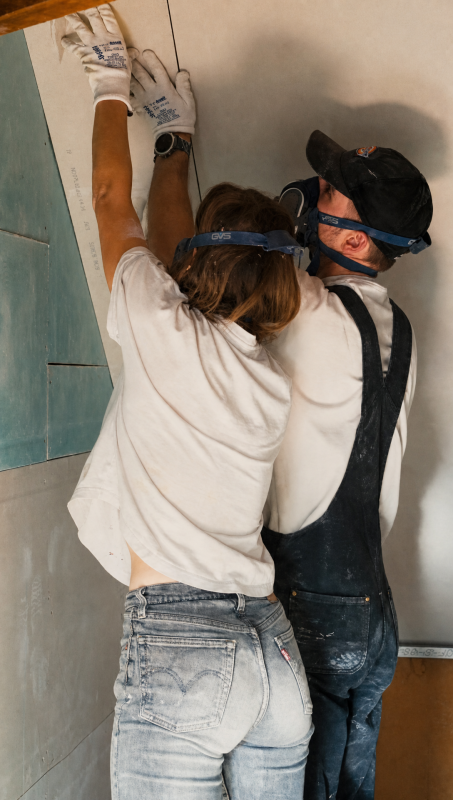
The plan has been to take one corner all the way to plasterboard-ready before touching the rest of the space, so any mistakes get made once, in one place. That corner now has its full double layer of wood fibre insulation, one layer packed between the beams and a second running over the top. Over that goes a breathable membrane, which was a bit of a nightmare to fit. Every seam has to be taped, and every edge that meets wood needs a bead of silicone jointing, so nothing about it is quick. Last of all came the metal railings and corner brackets that will carry the plasterboard. In France metal framing is the standard way to do internal walls, where the UK and US would usually reach for timber.
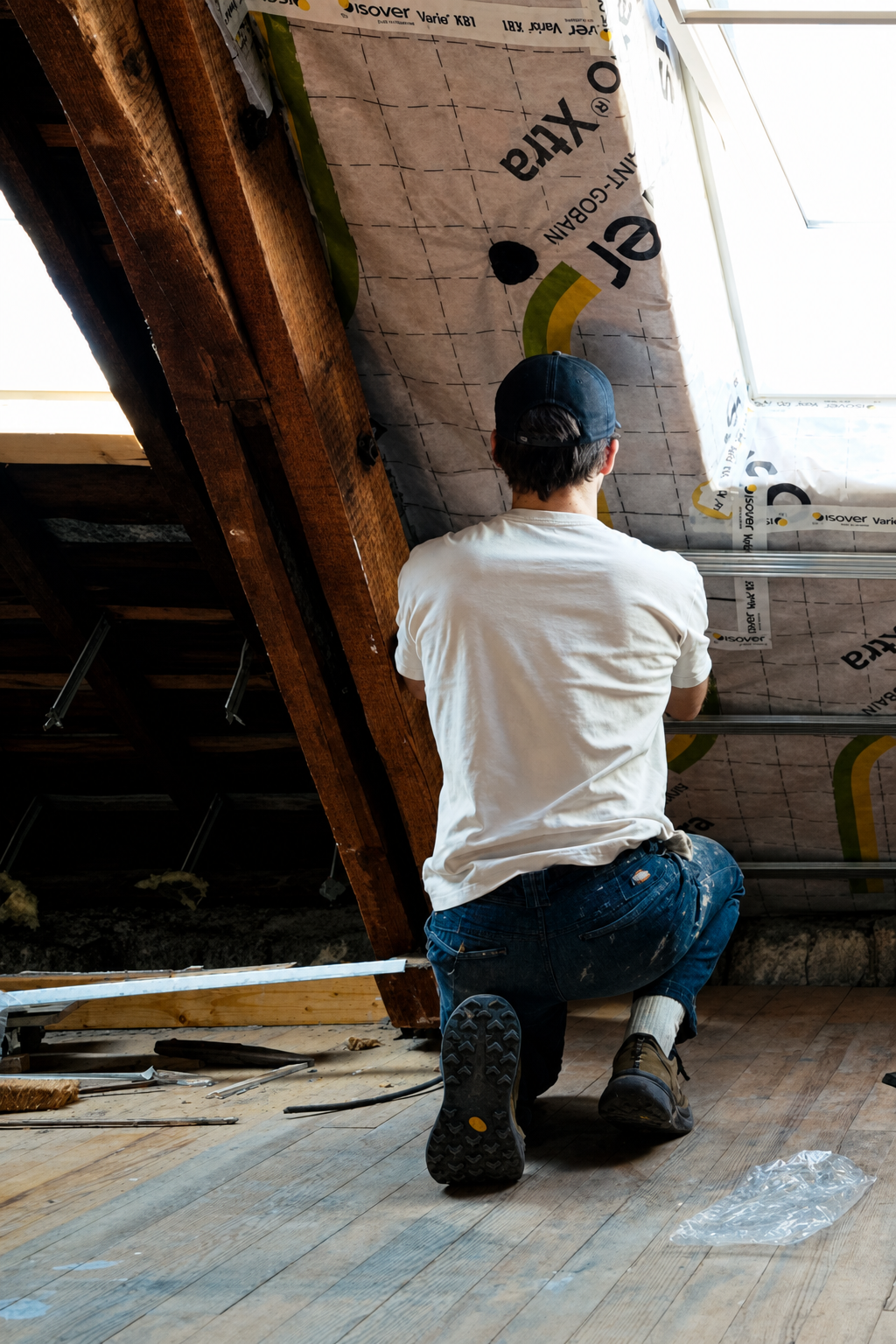
The membrane has tidied the whole space visually, and for the first time we can stand up there and see the room it will become, one day, our bedroom. A few of you commented on the last video that the attic looked nearly done. I’m sorry to report that it is not. We worked out on the back of a napkin that one corner takes two people roughly four days of solid work, and we both have jobs. We’re slow, but we’re getting there.
The Gate We’d Stopped Noticing
Now for the project people have been asking about for ages. The old gate at the back of the garden is warped, rusty and frankly horrible, and plenty of you have said as much in the comments, usually right after complimenting the flower beds it sits behind.
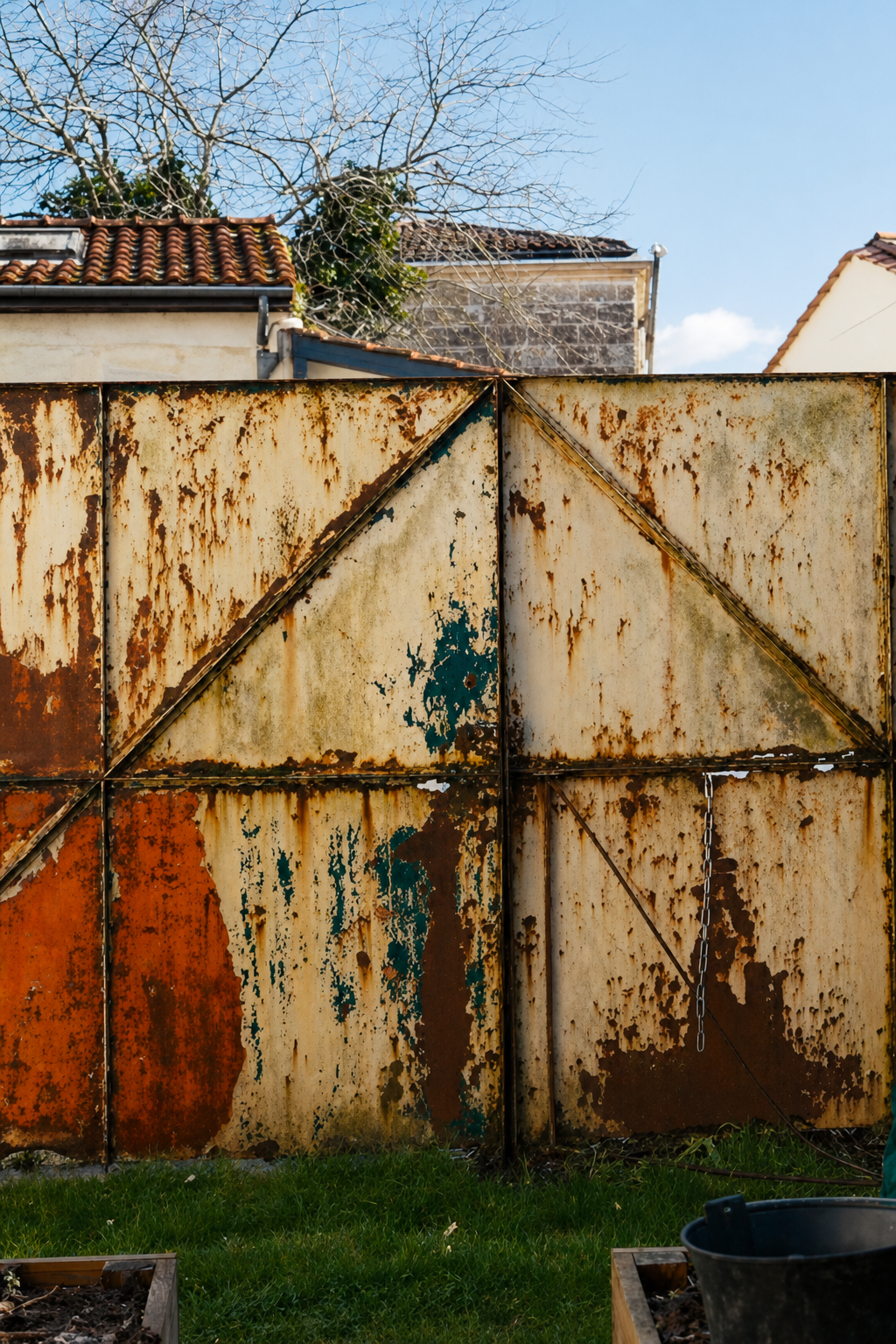
Honestly, we’d stopped noticing it. It has never been a priority, and for a long time we couldn’t decide whether to live with it or replace it. It opens inwards, which is a shame, because that corner is a lovely shaded spot where Romy would love to put some seats to enjoy the beds and the view of the house. Replacing it properly is a project for another year though. There’s neither the time nor the money for it right now, so the gate stays, but it doesn’t get to stay looking like that.
Romy took charge. The junk piled against it went off to the tip, the moss and flaking paint came off with the power washer, and then began the scraping. She’d budgeted an afternoon for it. It took two days. Messy, dusty days, though she admits there was something satisfying about it once the layers started coming off.
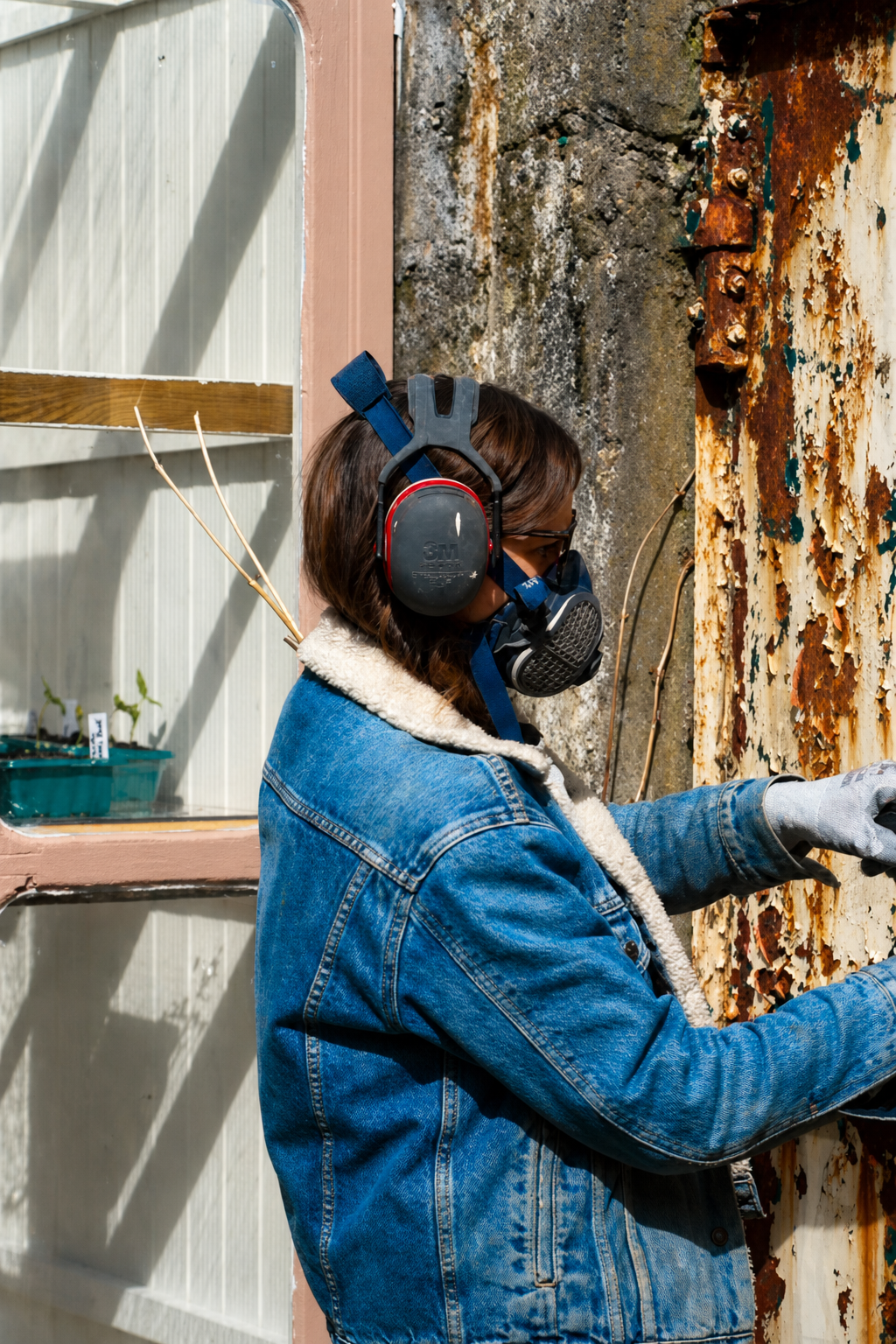
With the metal bared, you can see how damaged the gate really is. Some patches are too far gone to ever scrape clean, which is why the next step was an anti-rust treatment that can go straight onto rust. It’s the same product we used on the front gate, and it did its job well there. It dries clear, so there’s no dramatic change to look at, but it should buy the gate a couple more years, which is all we’re asking of it.
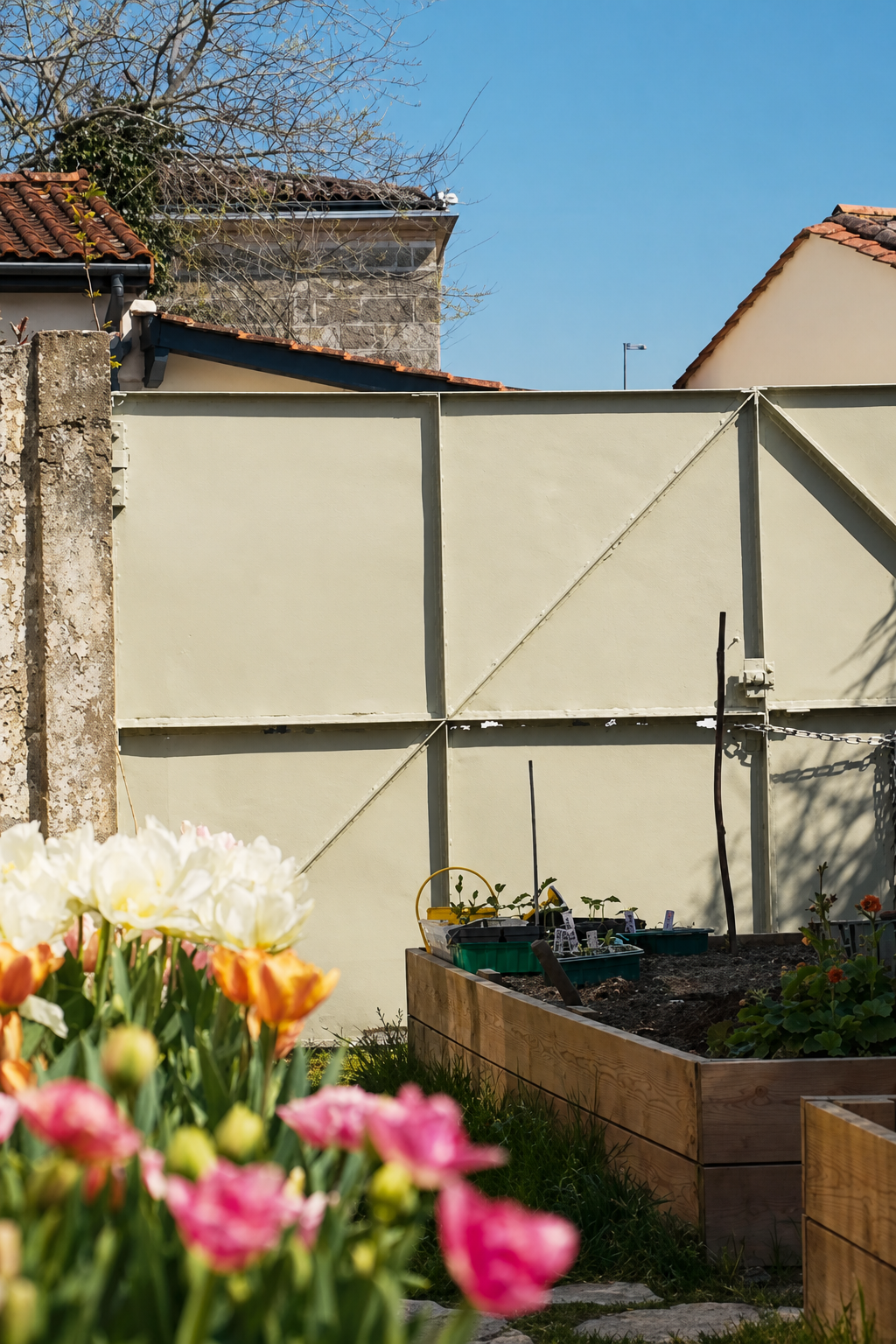
As for the paint, Romy ran a poll on Instagram, opinions arrived in volume, and the winner is French Gray by Farrow and Ball, a soft grey green that sits quietly behind the flower beds instead of shouting over them. A few coats later, the gate has gone from the worst thing in that corner of the garden to something we actually like looking at.
A Mitre Station For The Cave
While Romy had the gate in hand, I went underground. The cave has been absorbing tools and offcuts since we moved in, and finding anything down there takes longer than the jobs themselves. So I’m giving it some order, starting with a mitre station along the wall we built when we insulated down there: cabinets either side, saw in the middle, somewhere to quickly cut the long lengths of wood that every project in this house seems to need.
Step one was levelling a patch of the cave floor, which is dramatically not flat, and that alone swallowed an unreasonable amount of time. Then came a lesson. To save time I bought flat pack cabinet carcasses from Leroy Merlin instead of building them. The first one went together so flimsy that I had to reinforce it, and by the end it had taken me about as long as building the thing from plywood would have. Lesson learned, wallet lightened.
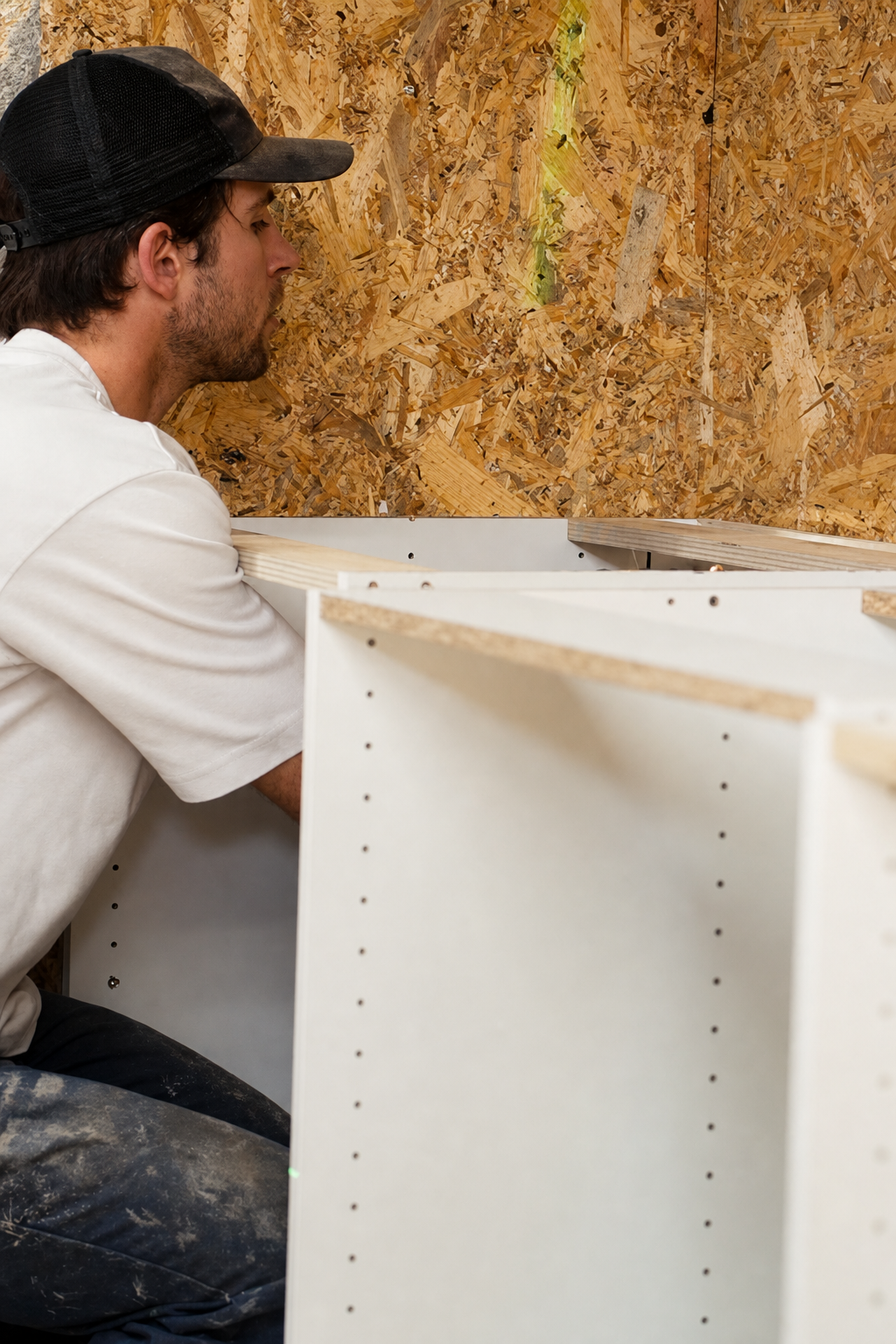
The station is installed but not finished. Drawers, doors and a face frame will come later, in a similar style to the kitchen but probably a lighter colour, so the cave slowly stops looking like a dumping ground and starts looking like a workshop.
First Seeds In The Greenhouse
The salvaged window greenhouse we finished last episode is now earning its keep. Romy has set herself a challenge this year. After seasons of growing mainly cut flowers, the beds are getting vegetables.
Tomatoes lead the way, several varieties of them, started in the greenhouse where they’ll get the warmth they want. Basil goes in alongside, in quantity, because I make a lot of pesto and the plants never keep up. Kale is bound for the shady bed at the back, since we eat piles of it.
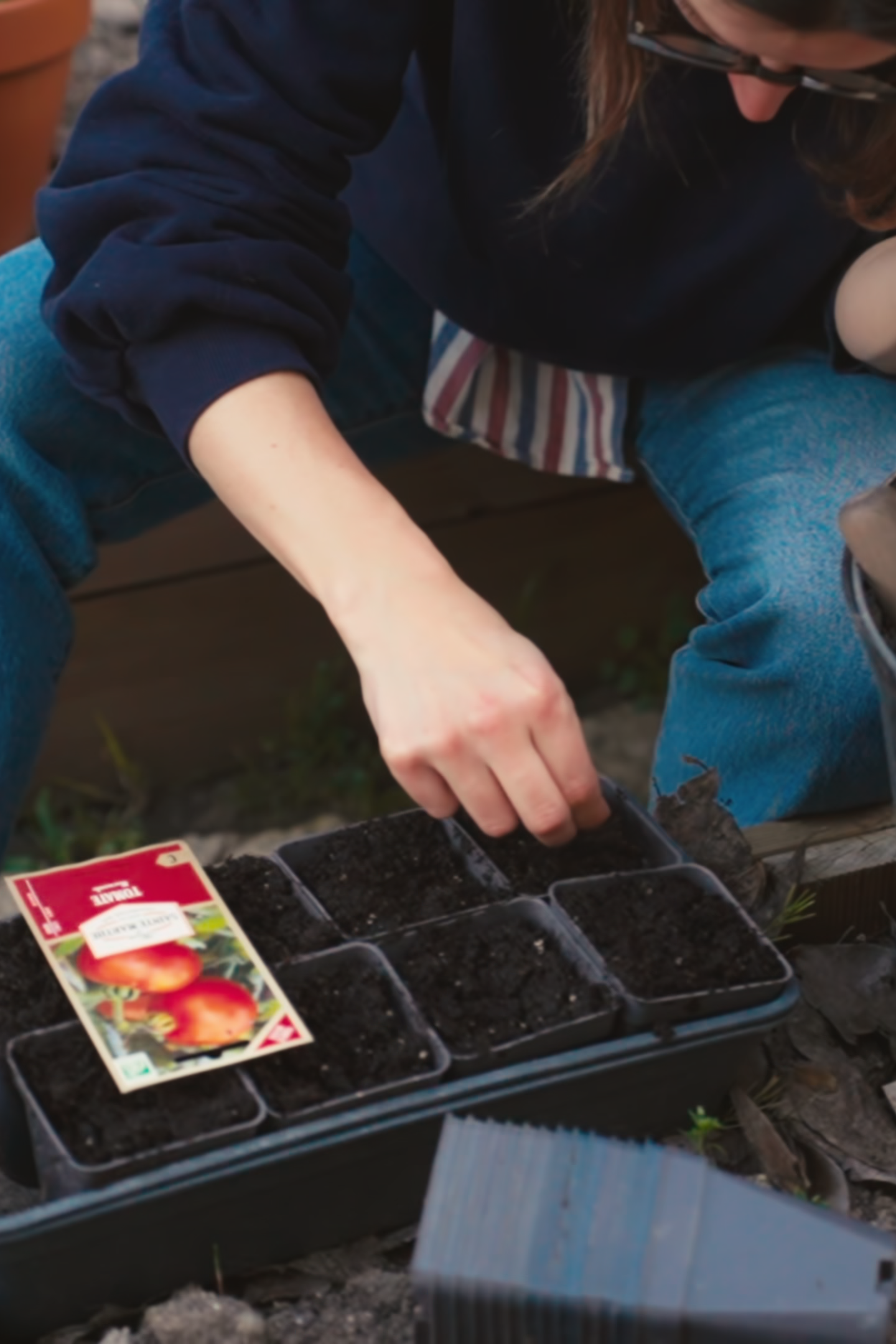
The flowers aren’t going anywhere though. Borage and nasturtiums will grow among the tomatoes for the pollinators, with some trailing nasturtiums to spill over the sides of the beds, and there are cosmos, scabiosa, sunflowers and zinnias queued up behind them. The plan this year is to sow in batches rather than all at once, so the seedlings don’t all demand planting out in the same weekend and the flowers don’t all finish together.
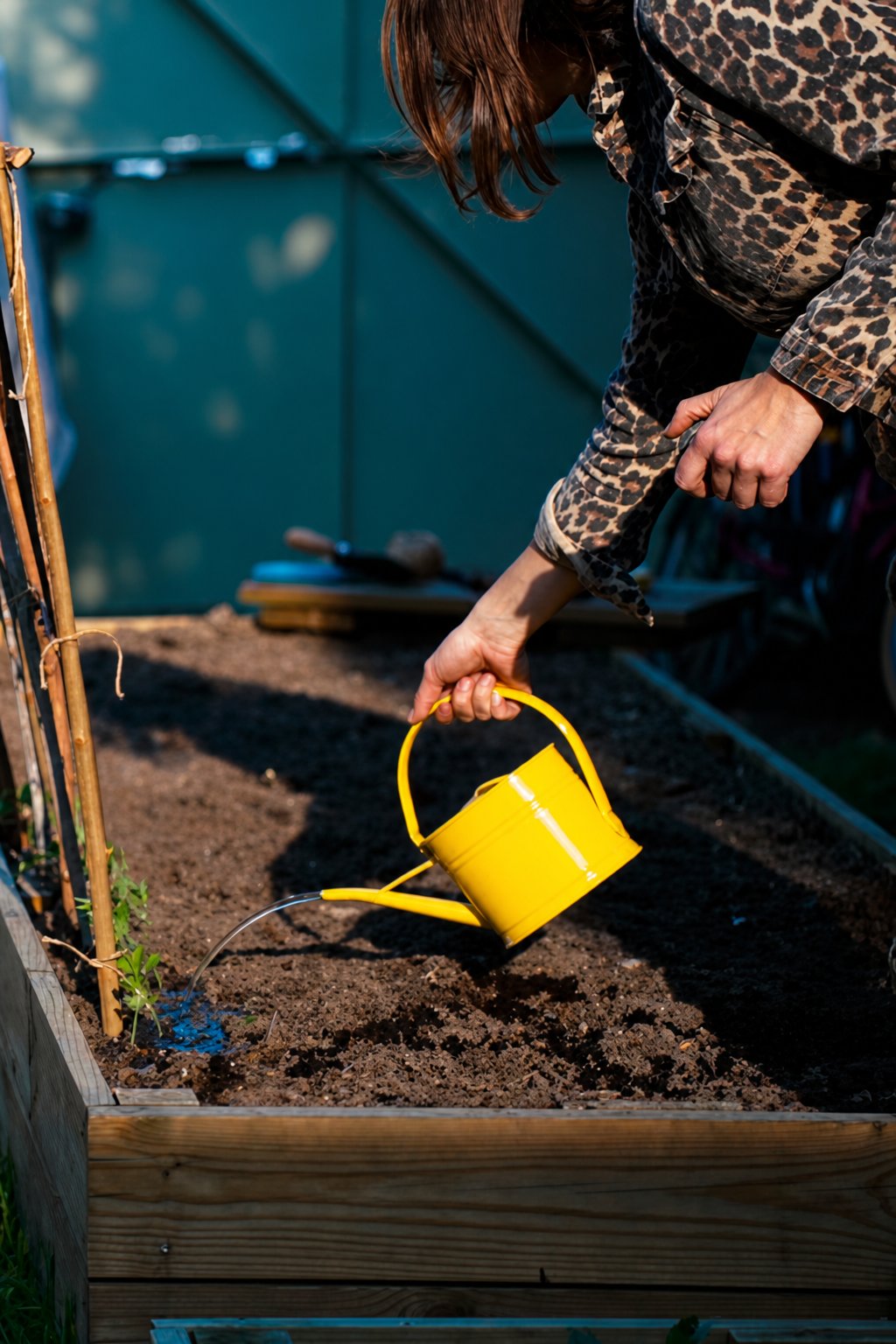
Some early sowings are ahead of the game already. The sweet peas are the best Romy has ever grown, by her own assessment, and they go into the beds this weekend along with snapdragons and scabiosa, all happy enough in the cool. That frees up greenhouse space for the next rotation of trays.
The whole episode is in the video at the top of this post, from the attic membrane to the gate’s fresh coat of French Gray and the first trays of seedlings. If you’ve restored an old iron gate, or you have strong opinions on what belongs in a first vegetable bed, we’d love to hear from you in the comments.