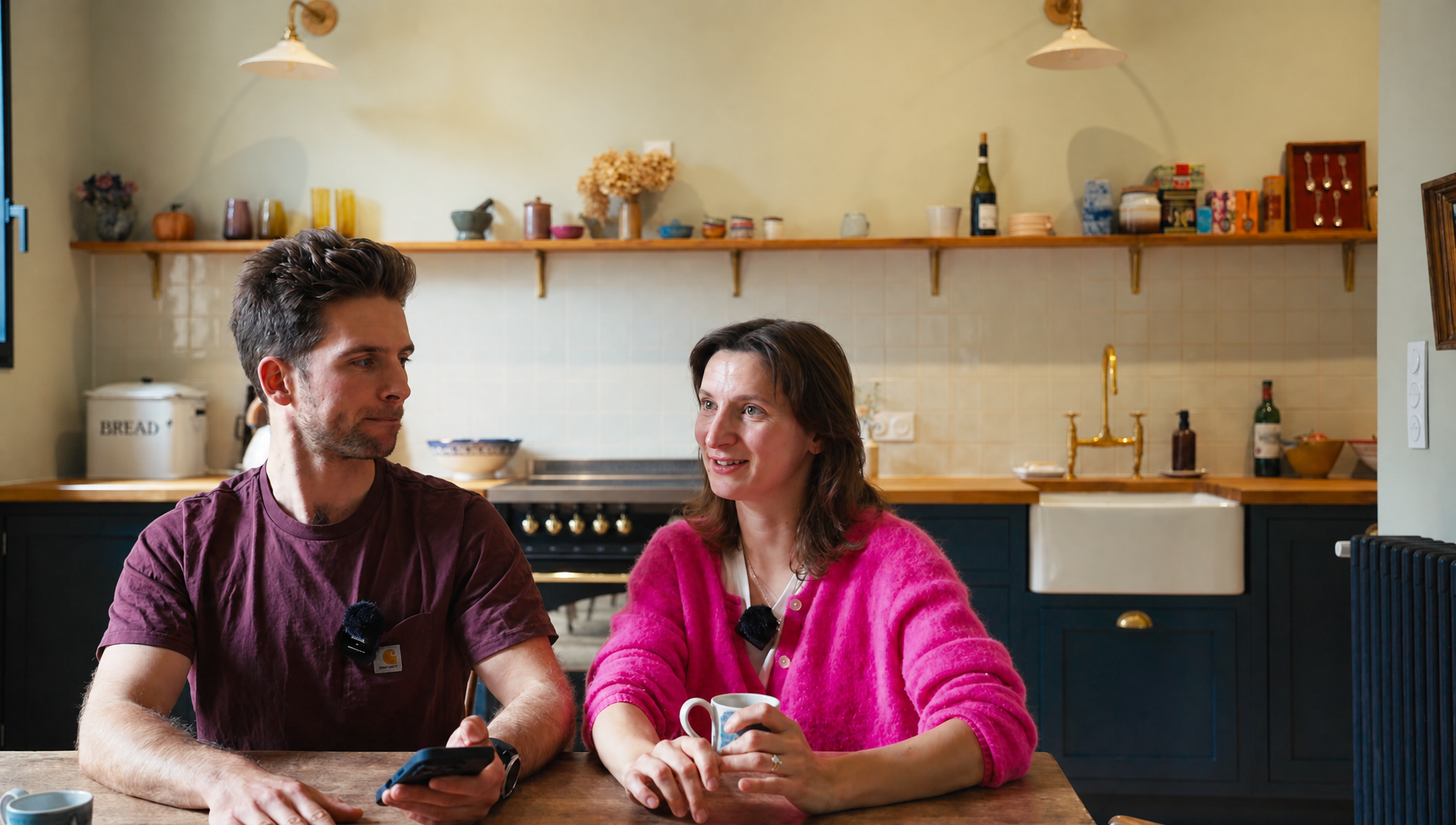
A couple of years ago we left the UK and bought an abandoned townhouse in the south west of France. Ever since, the questions have been piling up on Instagram and YouTube: how much did the house cost, how did we find it, what do we do for a living, and is Phoebe really as aloof as she looks. So we sat down at the kitchen table, pointed the camera at ourselves and answered the lot in one go. Neither of us much enjoys talking straight to a camera, but this was long overdue. The full conversation is in the video above, and the highlights are below.
Finding The House
The question we get most from people dreaming of doing the same thing is how hard it was to find a house like ours. The honest answer is not very. France has loads of historic properties waiting to be restored. The style changes with the region, so the search is really about finding the part of France whose houses you love, then accepting that the affordable ones usually need extensive renovation. That was always our plan. We looked mainly around central Bordeaux and viewed six or seven properties before this one.
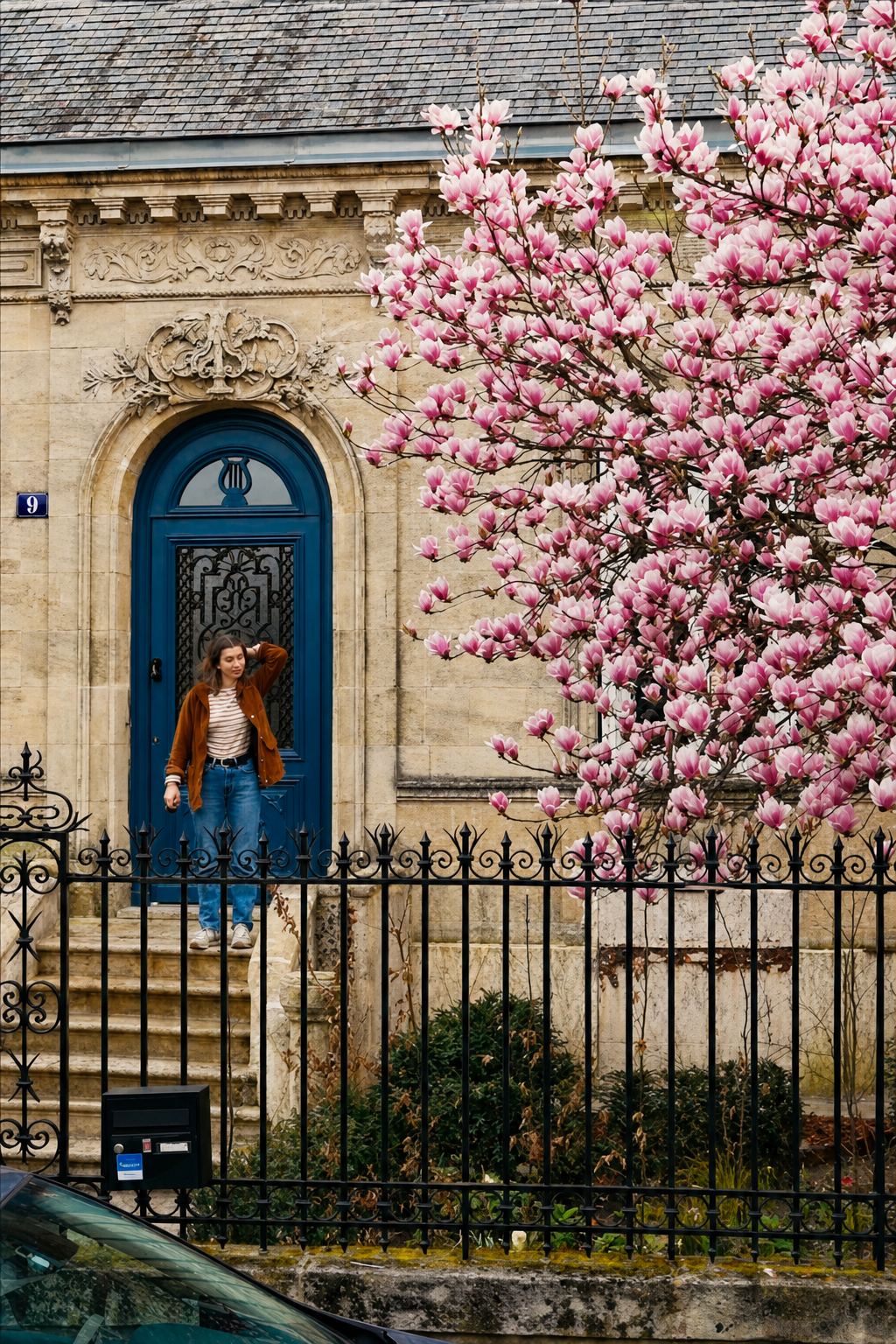
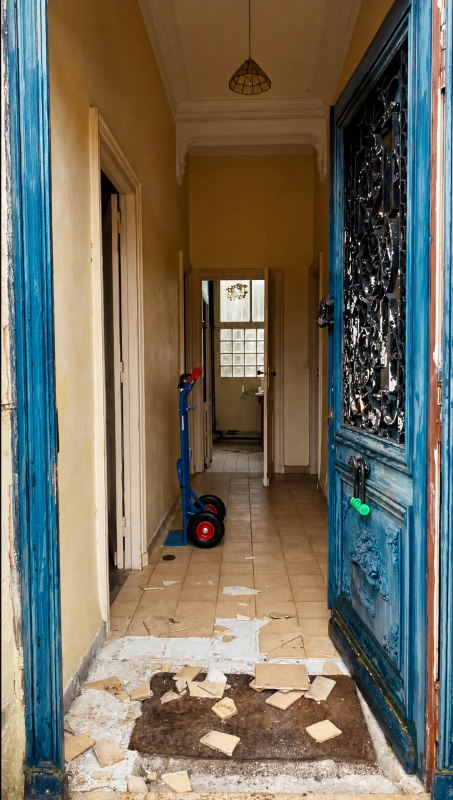
Romy was the one who said this is the one, and she knew from the end of the street. The rusty gate, the steps up to the front door, and the door itself won her over before she was through it. Inside, the layout is very traditional, a central hallway with rooms off it, which made it easy to read the house and picture it restored. We never wanted to change much, so a place with its charm intact under the mould and the leaky roof was exactly what we were after.
I took more convincing. The upstairs ceilings felt low, the fix we had in mind turned out to be impossible because of the beams, and at the asking price I thought it was too expensive. A second visit brought me round.
What It Cost
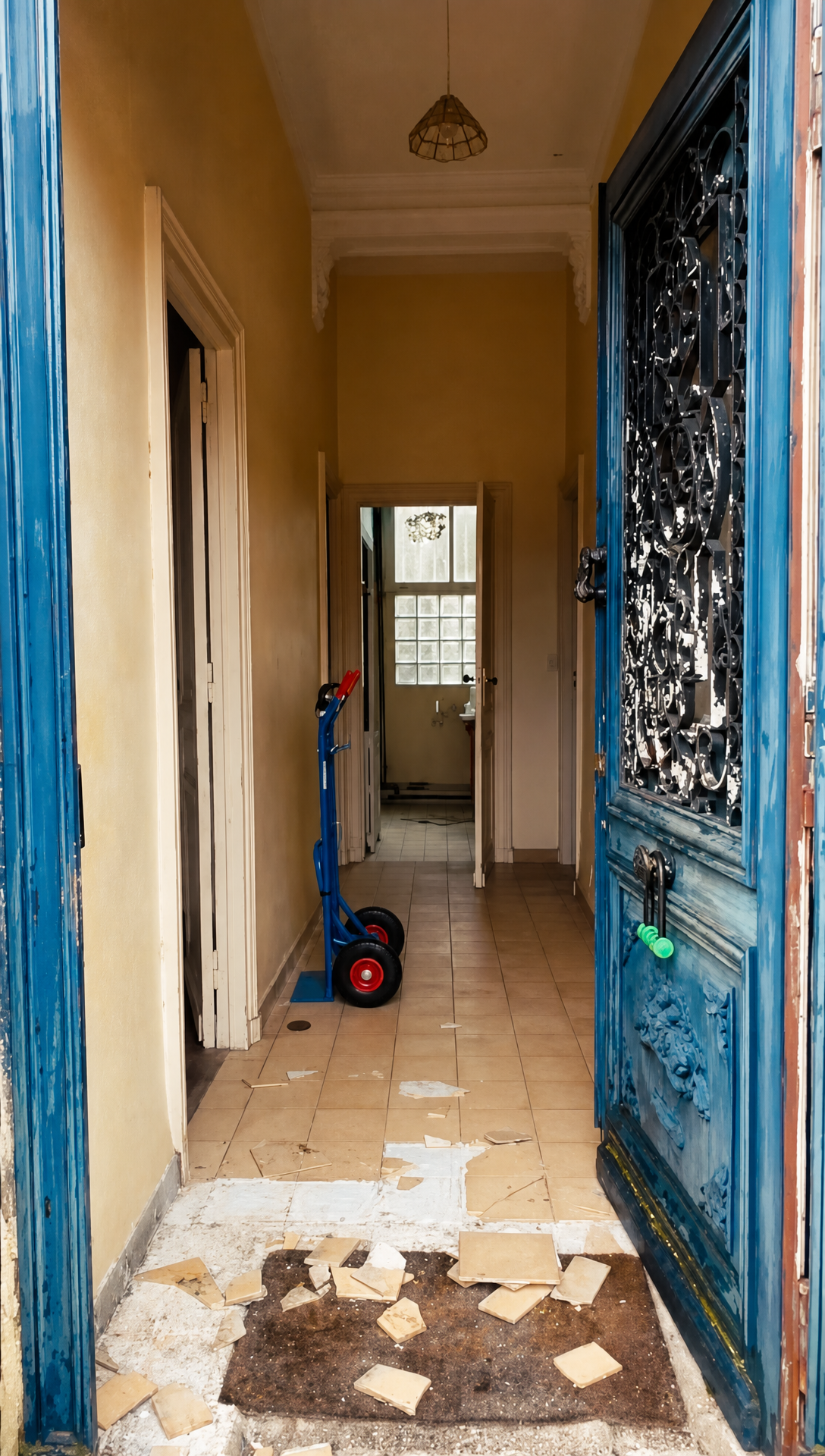
We bought in late 2023, after prices had climbed sharply, so even in poor condition the house was not cheap by French standards. There is a persistent idea online that France is full of bargain homes, and it is true, but only in isolated areas where few people want to live. For the price of this house we could have bought a small castle out there. In a metropolitan area, prices are closer to other European cities, though still well below the UK.
The numbers: the house first went on the market at 710,000 euros, which was a crazy price, and had dropped to 530,000 by the time we saw it. We offered 390,000, which I still think was the correct value, and settled at 450,000. We overpaid by about 30,000 and we knew it. We had fallen in love with the place, and since we were buying a home rather than an investment, it felt worth it.
The lesson for anyone eyeing the French market is that you can negotiate a lot on these old properties. Sellers tend to list high, partly because of a French rule that an offer at the full asking price must be accepted, so treat the listed price as a maximum.
For Now, Not Forever
A few of you asked whether this is our forever home. It is a for now home, but probably for a long time. We love the house, we love Bordeaux, and we have a good network of friends and family here. At heart, though, we are countryside people. The dream is more land, more garden for Romy, and perhaps one day a place big enough to run as a business. We have also discovered that we clearly enjoy renovating, so it will be an interesting moment when this house is finished. Whatever comes next may need to be even older.
From The Dordogne To London To Devon To Here
For those asking who we are: Romy is French, and grew up in the Dordogne, a couple of hours from Bordeaux, all castles and beautiful countryside, so beloved of British expats it has earned the nickname Dordogneshire. She moved to London in 2014 for an Erasmus year studying literature, and met me, a Brit, about a month after arriving. Twelve years later we are married, as of last year, and both the proposal and some of the wedding celebrations happened in this house.
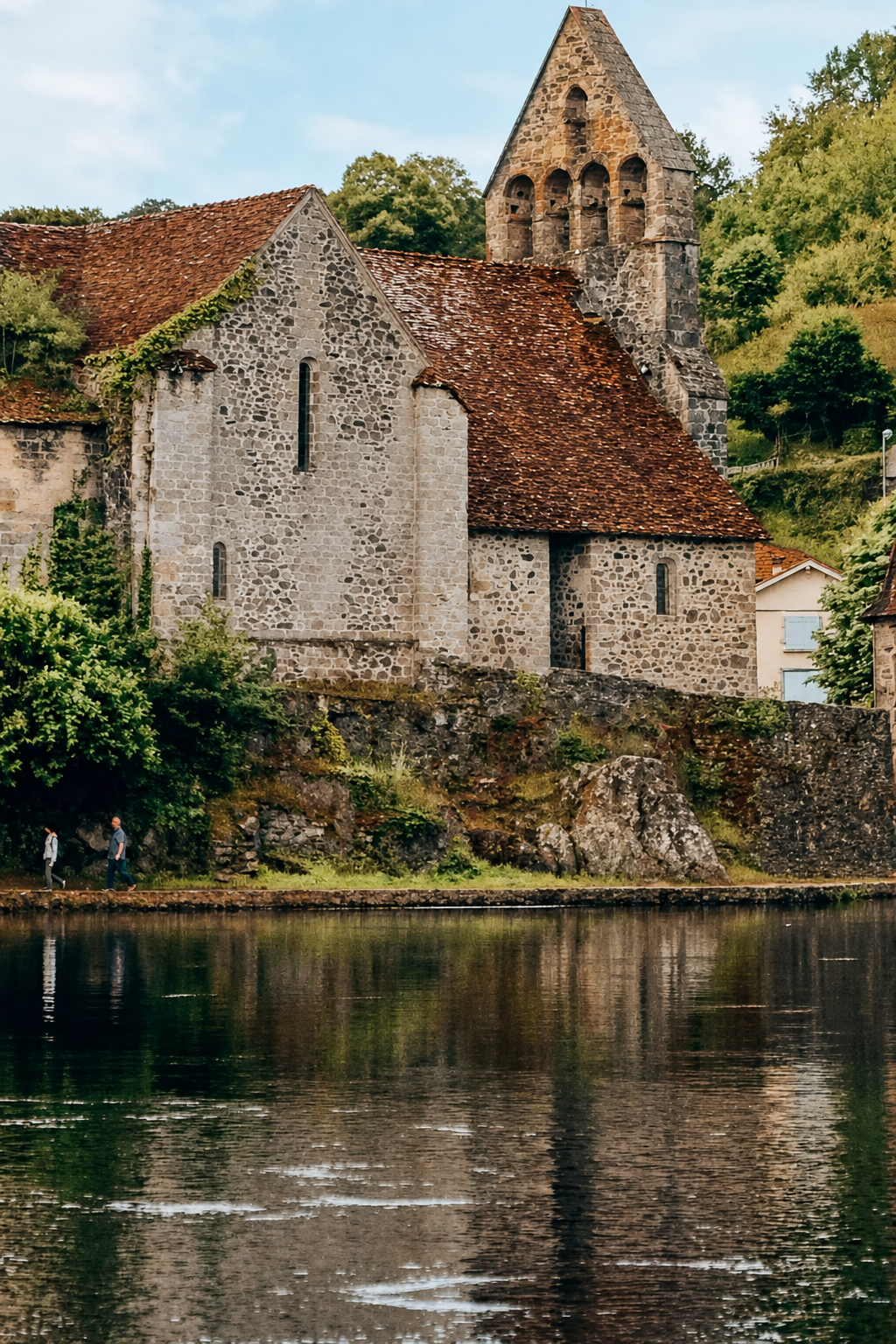
Why France? We loved London, but it is enormous, busy and expensive. At the start of Covid we moved to Devon and rented a cottage in that green rolling countryside. It was a beautiful chapter, but when the time came to buy, we had no real roots there. Romy has family around Bordeaux, the weather is kinder, and the city is a more manageable size, so we decided to try life in France.
Life In France
The quality of life here is very high. The access to good food, varied countryside and beautiful buildings is hard to beat, and the healthcare, coming from the UK with the NHS under strain, is night and day. The one real negative is the bureaucracy. Anything governmental takes a long time and the systems are antiquated. It is well known, it is worth the headache, but go in with your eyes open.
I do get asked whether I speak French. I do, though anyone who has heard me chatting to Fred, our lovely neighbour, in the videos knows it remains a work in progress. Working remotely in English all day does not help.
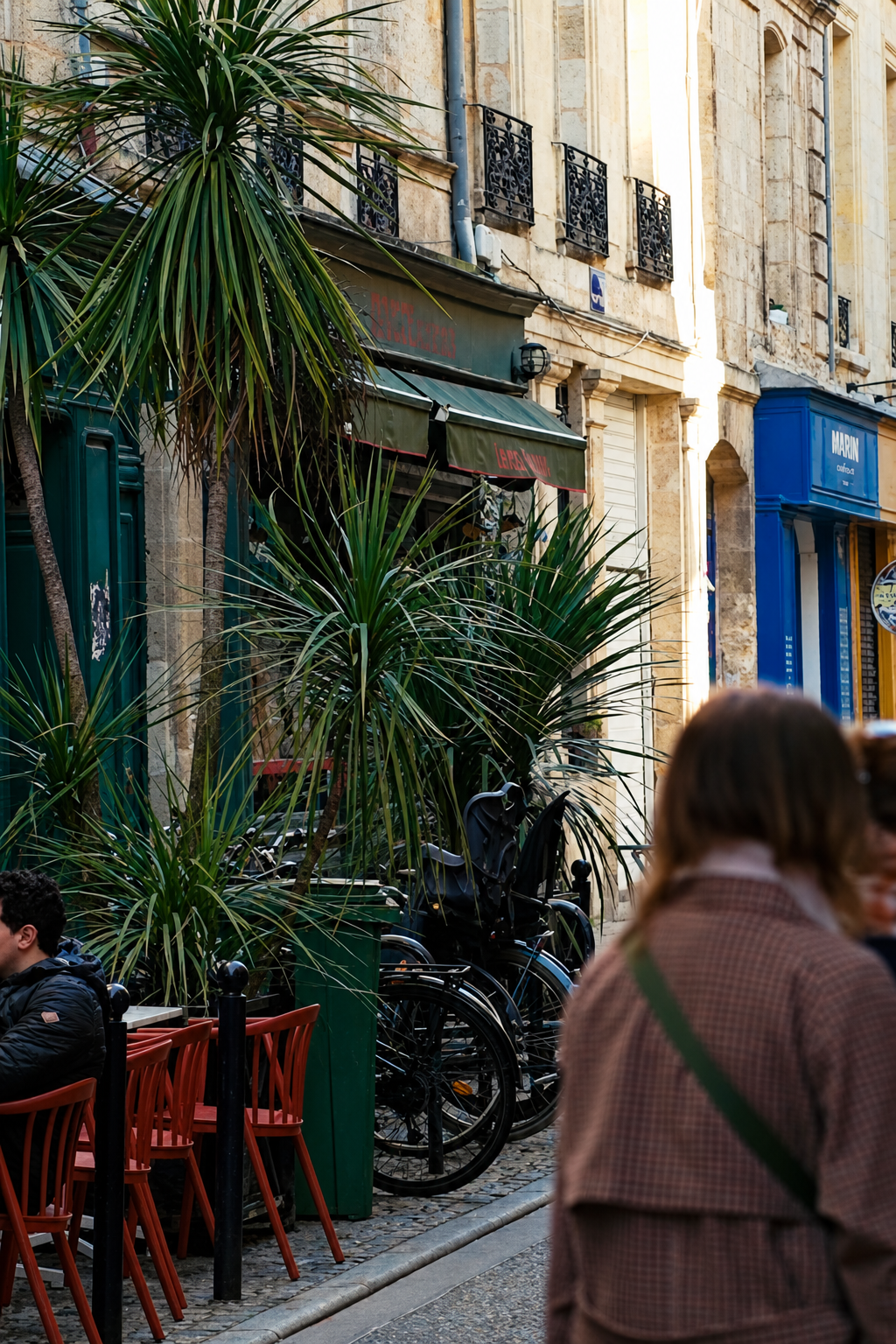
For families asking where around Bordeaux to look: the city itself is safe and full of lovely neighbourhoods, and the little towns around it are worth a look too. Half an hour out, the Entre-deux-Mers is beautiful countryside with bigger properties, the Saint-Émilion area is wonderful, and if you are happy to go further, we will always recommend the Dordogne.
Architects, Contractors And Doing It Ourselves
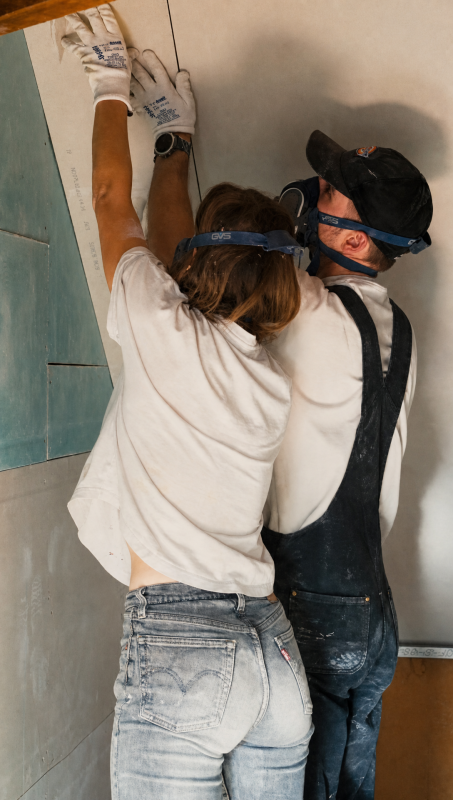
We never used an architect. The changes we wanted inside were not drastic, with one exception: we opened up the load-bearing wall downstairs and put a beam in. We did use contractors at the start, for the plumbing, the electrics and the masonry. That was work we could not do ourselves while living off site, and some of it requires certification in France for insurance reasons. Back then speed mattered, because every month of renovation was a month of paying to live somewhere else. Since moving in, we do everything ourselves where we can. It is cheaper, and we learn as we go.
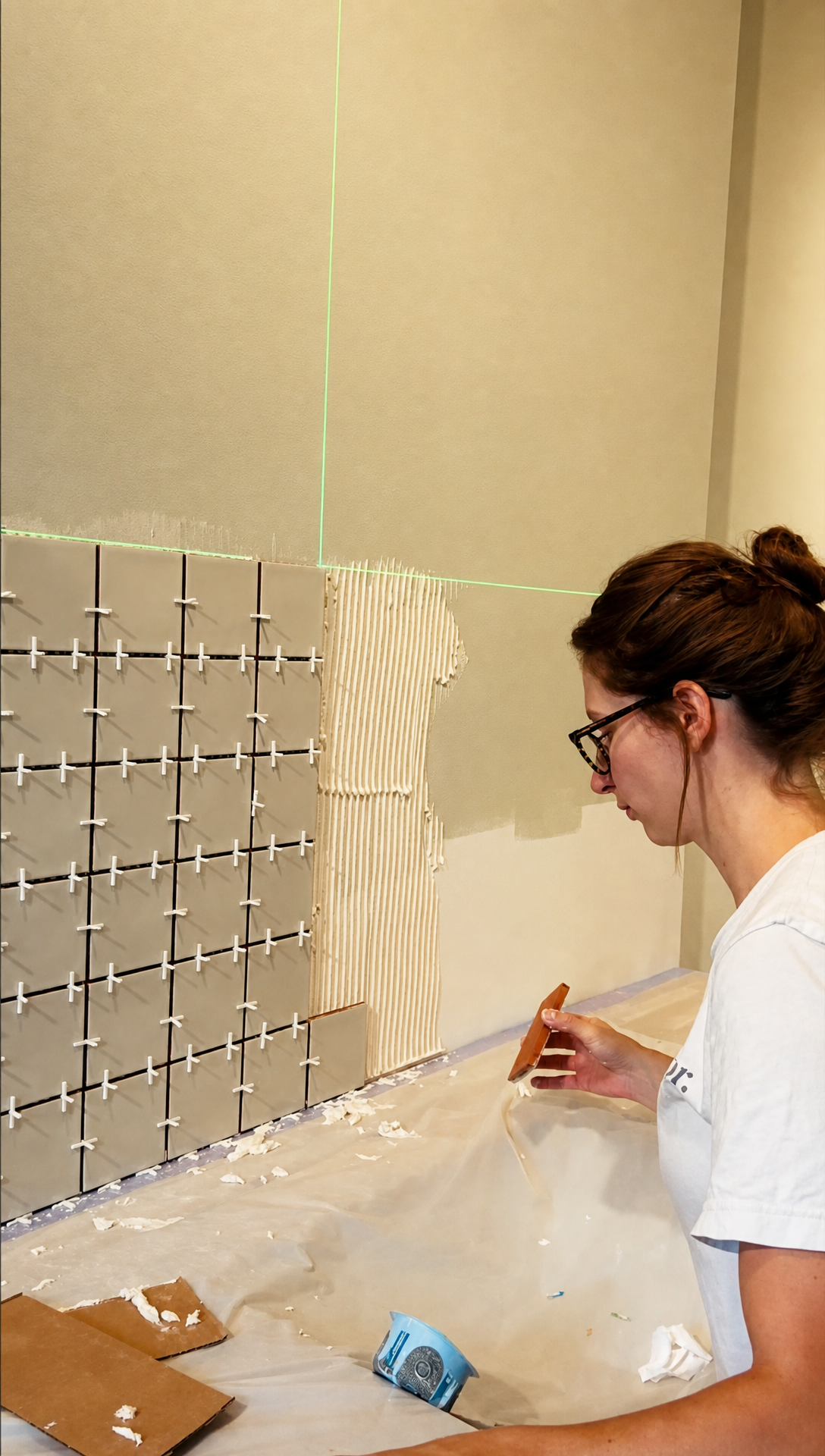
Neither of us came to this with any background. Our one previous renovation, a London flat, was done entirely by builders, and the most extensive DIY in it was putting up shelves. It is not a family tradition either; neither set of parents does DIY. Everything we know has come from YouTube and reading online. It is entirely possible to learn this way, it simply takes longer, and you need to plan for errors.
The biggest thing we have learned is that almost nothing is irreversible. Novice renovators worry that one wrong step will ruin everything, and the opposite is true. Lay a tile badly and you can rip it up and lay it again. Frustrating, sometimes expensive, but still cheaper than paying someone else, and you keep the skill.
If you do want professionals, budget between 1,000 and 1,500 euros per square metre to restore a home in France. Labour here is expensive, and on the big cheap countryside places, the renovation often costs more than the house.
Jobs, Time And Why The Videos Are Slow
YouTube is not our full time job, because it does not pay us enough to be. We publish too few videos for the ad revenue to carry us. We both work in tech alongside the channel. I went part time in the middle of last year to take on the editing, and this week I quit altogether to focus on some new projects, which we will share when there is something worth showing.
How do we manage our time between work and renovation? Not very well. The rhythm is roughly one week of renovating, then one week of editing, which is why progress on the house is slower than we would like. A single video takes three to four full days to edit, and I genuinely do not understand the people who post weekly.
We started the channel because we failed to document the first, most intense phase of the renovation and regretted it. Renovating can feel like standing still, and looking back at the videos is what shows us how far the house has come. The supportive comments make the whole thing worthwhile. We read every one of them.
Flowers, Sewing And Being Boring
A lovely question asked where our passions for flowers, textiles and the rest come from. For Romy, it started with a flower arranging workshop in London, a birthday present from me, and she was hooked. Buying flowers in London is expensive, so she resolved to grow as many as she could, and Devon is where the gardening began in earnest. Wherever we live now, the garden gets woven into the project.
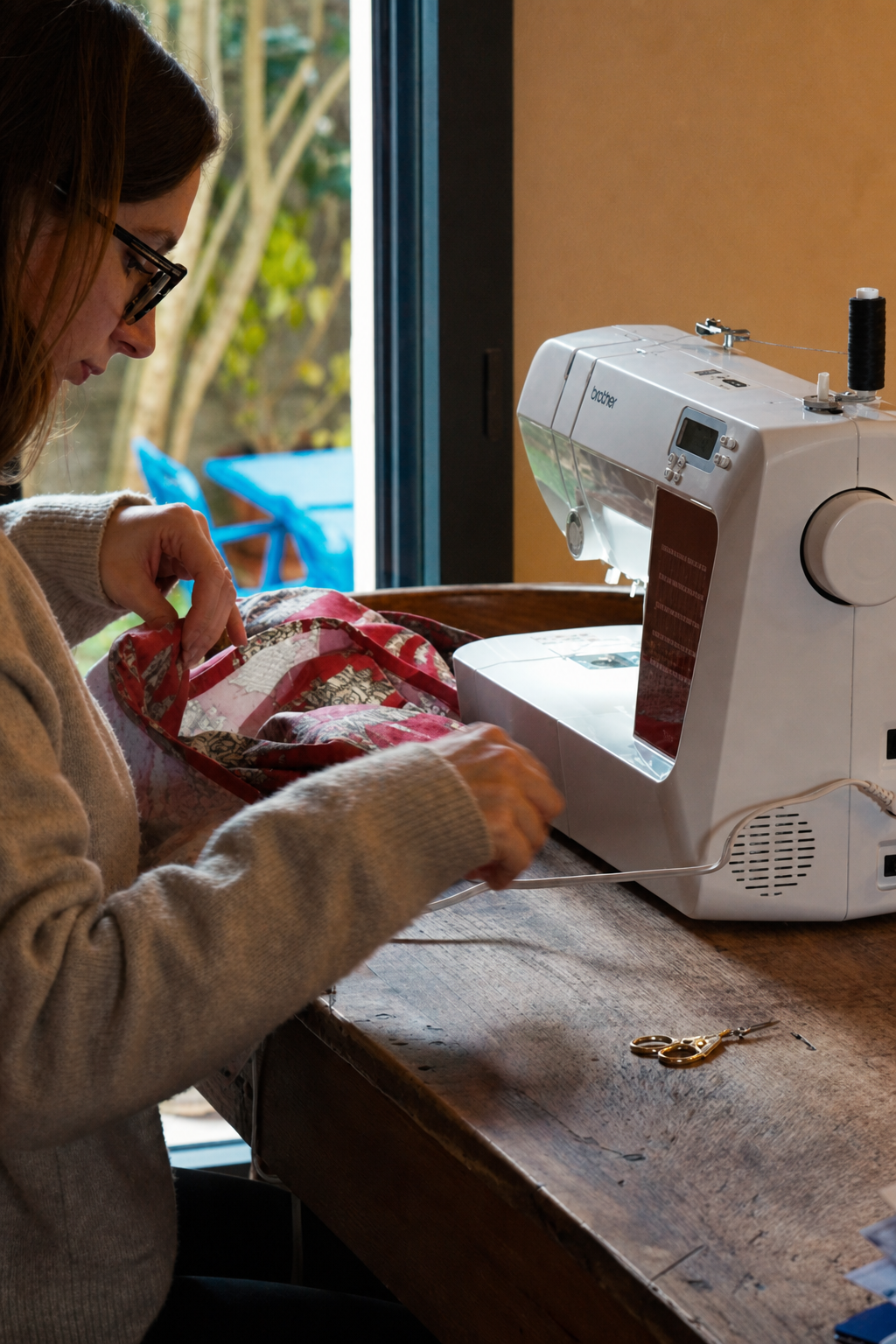
Beyond that, we are both makers by nature. Romy has had phases of sewing, embroidery and calligraphy, and the house has absorbed most of those skills. Our hobbies outside the renovation are mostly renovation adjacent, visiting houses and gardens, poking around architecture and history. Do we have hobbies that have nothing to do with the house? No. We are very boring people.
Phoebe, The Most Important Section
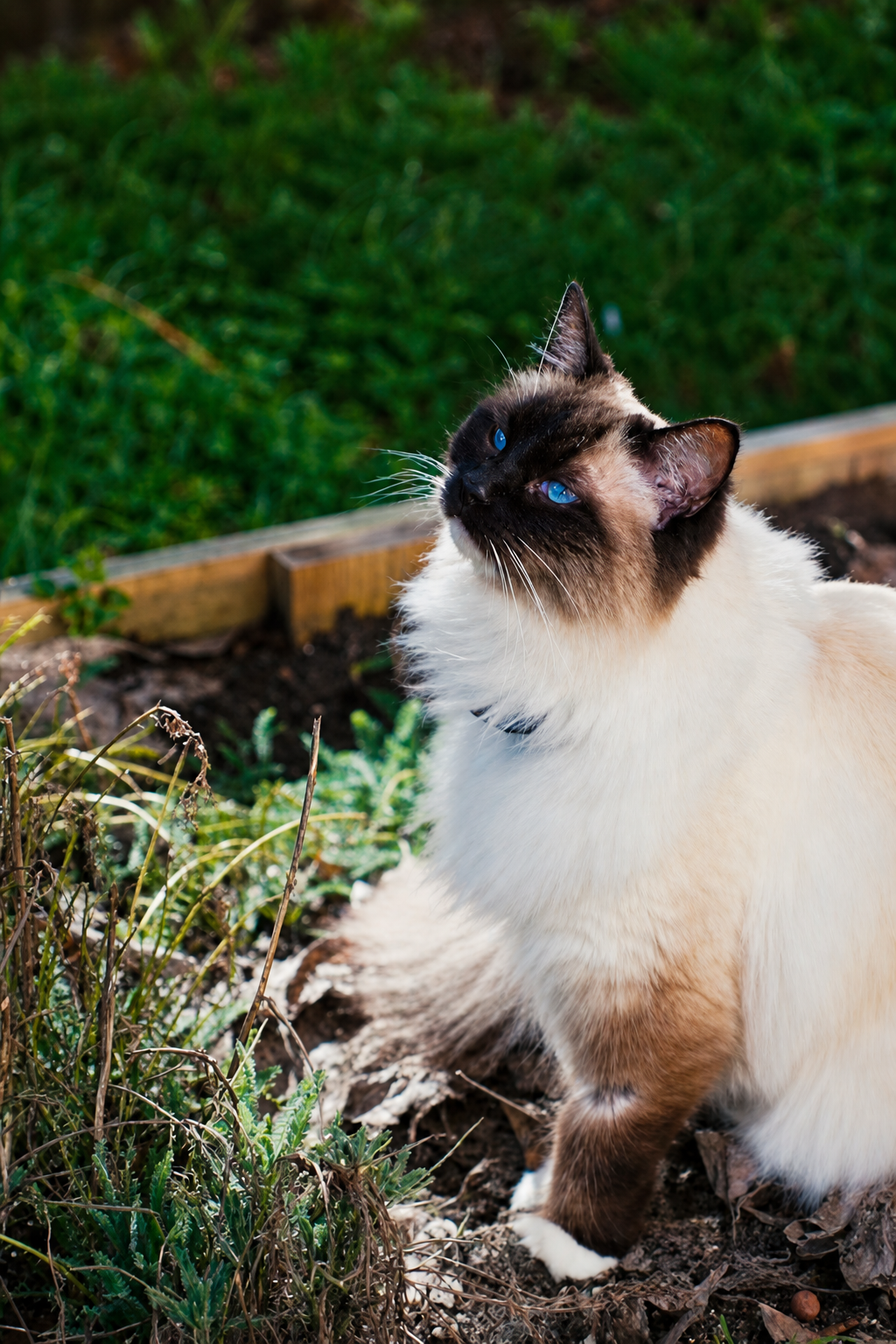
Phoebe got more questions than the house. She is almost six, and she is a ragdoll, though not a typical one. Google will tell you ragdolls are laid back, cuddly and placid. Phoebe has a very strong personality, knows exactly what she is worth, and has the two of us as staff. We are fine with this arrangement.
Does she like other cats? She hates other cats. She is not keen on most people either, which is the great tragedy of her life, because everyone who meets her wants a cuddle. She will let you touch her when she has decided you may. Marian asked whether she is the most beautiful cat in Bordeaux. Yes, objectively, and possibly in all of France. She wandered in on cue while we were filming her section, so she clearly agrees.
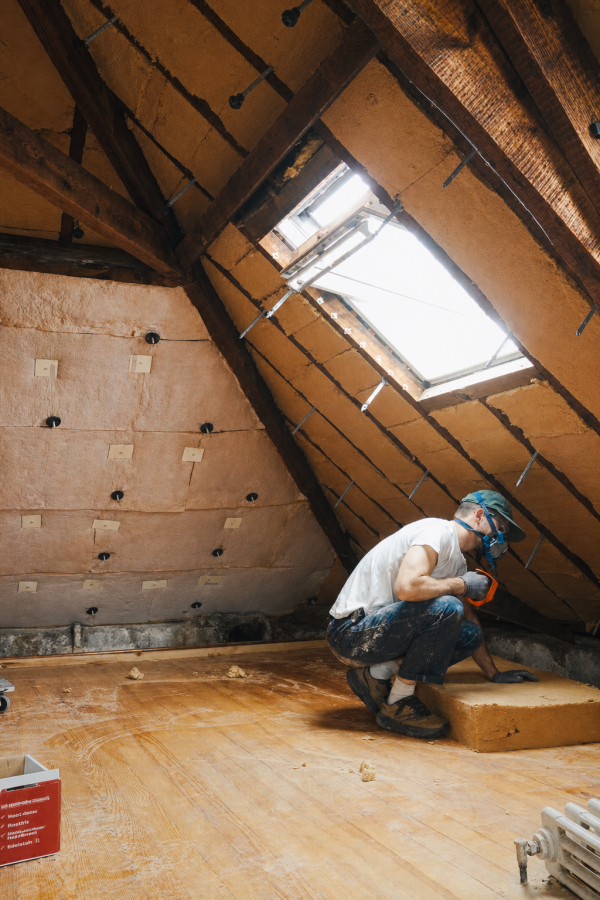
That is everything we could fit before the video got too long. The full answers are in the film at the top of this post. Next up we are back to the attic, and there are some projects brewing in the garden. If your question did not make it in, leave it in the comments, we read all of them, and we would happily do another one of these.